
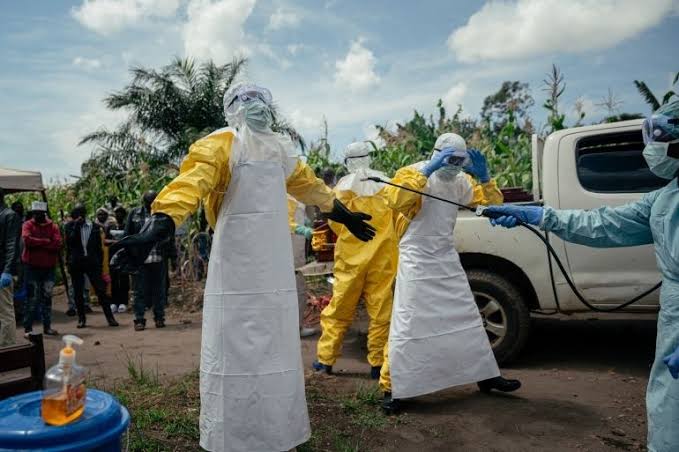
Uganda has introduced stricter border controls and banned concerts and other mass gatherings in high-risk districts bordering the Democratic Republic of Congo (DRC) as authorities strengthen measures to prevent the spread of Ebola.
The restrictions were announced by the Ministry of Health on November 19 following concerns over increased cross-border movement, including through unofficial crossing points.
Uganda’s Ministry of Health Permanent Secretary, Dr Diana Atwine, said authorities had observed continued movement of people across the border, increasing the risk of the disease entering the country and spreading to other communities.
Under the new measures, concerts, festivals, rallies and similar public gatherings in designated high-risk border districts have been suspended until further notice.
Organisers seeking to hold events in the affected areas must obtain written clearance from the Ministry of Health.
Returning travellers face health checks and quarantine
Ugandans returning from the DRC will undergo mandatory health risk assessments and 21 days of quarantine or monitored self-isolation, depending on the assessment.
The government has also warned that people who cross into Uganda illegally, as well as those facilitating unauthorised crossings, could face prosecution or other penalties.
Humanitarian workers crossing the border must obtain clearance from the Director General of Health Services.
The movement of bodies of deceased persons into or out of Uganda will also require prior clearance.
Authorities have further strengthened screening measures at Entebbe International Airport, requiring passengers to complete locator forms to support contact tracing.
Additional restrictions affect day scholars travelling between the DRC and 34 designated high-risk districts, while boarding students with possible exposure must complete 21 days of quarantine in designated facilities before returning to school.
WHO warns of continued Ebola transmission in DRC
The measures come as the DRC continues to experience sustained transmission of Bundibugyo virus disease, a rare form of Ebola.
In its November 20 update, the World Health Organization reported 11,613 confirmed cases and 5,678 deaths in the DRC as of November 17.
The outbreak had affected 68 health zones across eight provinces, with active transmission reported in 48 health zones.
The WHO said the outbreak continued to constitute a public health emergency of international concern, citing the scale of transmission, community deaths, insecurity and challenges affecting the response.
The agency also reported that no new cases had been recorded in Kenya or Nigeria since its previous update, with both countries continuing their countdown towards declaring their outbreaks over.
Uganda’s outbreak was reported to have been controlled in August.
Why the measures matter to East Africa
Uganda’s decision highlights the risks posed by cross-border movement during a major public health emergency.
The DRC shares borders with several countries, including Uganda, Rwanda, Burundi and Tanzania, while movement between neighbouring communities remains important for trade, family connections and daily economic activities.
The restrictions could therefore affect travellers, transport operators, traders, schools and businesses operating in border areas.
For East African countries, the situation reinforces the importance of coordinated disease surveillance, effective screening at border points and rapid sharing of public health information.
The WHO has advised against imposing general travel or trade restrictions on affected countries, instead emphasising cross-border cooperation, surveillance and preparedness.
Uganda’s latest measures are aimed at reducing the risk of imported infections while authorities continue monitoring the situation in neighbouring DRC.