
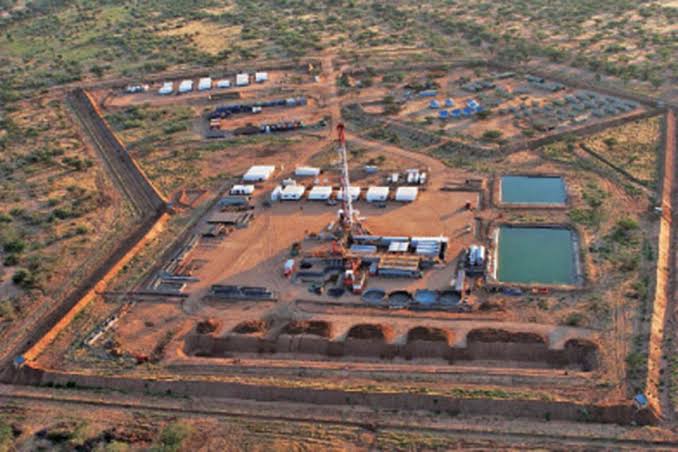
Kenya has taken a major step towards becoming an oil-producing country after commercial drilling operations officially began in the South Lokichar Basin in Turkana County.
The milestone was marked on Friday, November 20, following the spudding of the Amosing 1 well pad by Gulf Energy E&P BV SEZ, the company undertaking the development of the oil fields.
Energy and Petroleum Cabinet Secretary Opiyo Wandayi presided over the event, describing the commencement of drilling as an important milestone in Kenya’s efforts to develop its petroleum resources.
The government has set December 1, 2026, as the target date for the commencement of initial crude oil production.
Gulf Energy is targeting an initial output of approximately 20,000 barrels per day during the first phase of the project.
Turkana oil fields targeted in first phase
The initial development programme will focus on four fields: Ngamia, Amosing, Twiga and Ekales, collectively known as NEAT.
The wider development covers six oil discoveries in Blocks T6 and T7 in the South Lokichar Basin, with estimated recoverable resources of approximately 326 million stock-tank barrels over the 25-year contract period.
ALSO READ:
- Sugar Stakeholders Demand Tighter Controls on Imports
- KCB Group’s Profit Surges 24% to KSh58.6 Billion as Assets Hit KSh2.4 Trillion
The drilling operation follows the installation and commissioning of an onshore drilling rig leased from China’s Great Wall Drilling Company.
The government says the project is progressing in line with the approved Field Development Plan.
Gulf Energy has also engaged international oilfield services companies to support well development and the facilities required for initial production.
How the crude oil will reach Mombasa
During the initial phase, crude oil from Turkana is expected to be transported by road to Mombasa for storage at Kenya Petroleum Refineries Limited tank farms.
The transportation arrangement is expected to support the early production phase as the country prepares for its first crude oil exports.
The government has also indicated that infrastructure investments in the oil-producing region will support the development of the project.
Transport Cabinet Secretary Davis Chirchir said more than KSh24 billion was being invested in infrastructure in the region, including roads intended to support oil operations and improve connectivity.
What oil production could mean for Kenya
The development could provide Kenya with another potential source of foreign exchange earnings and government revenue.
The country has long explored the possibility of commercial oil production, with the South Lokichar discoveries in Turkana raising expectations of a new petroleum industry.
Gulf Energy is targeting an increase in production to approximately 50,000 barrels per day in a subsequent phase as development of the wider oil fields progresses.
However, the economic benefits will depend on actual production levels, international crude prices, transportation costs and the expenses involved in developing the fields.
There will also be questions about how the government manages oil revenue, environmental safeguards and the interests of communities living in the oil-producing region.
For Turkana residents, the commencement of drilling raises expectations around employment, infrastructure and local economic opportunities.
Kenya’s transition from exploration and development to production is now entering a critical stage, with December 1 set as the target for the first oil.