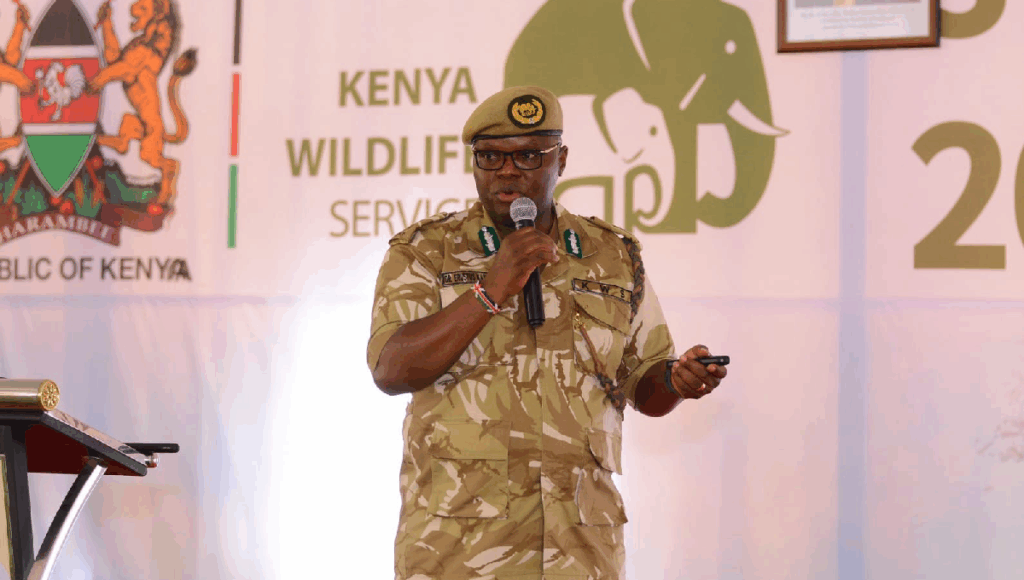
Kenya Wildlife Service (KWS), long regarded as a flagship institution in conservation, is now at the heart of one of the country’s most explosive corruption scandals with Director General Dr. Erastus Kanga facing fierce accusations of turning the agency into a den of rot, favouritism, and malfeasance.
Once celebrated for his academic credentials and two decades in field conservation, Dr. Kanga now confronts a perfect storm of allegations from multiple fronts; Ethics and Anti‑Corruption Commission (EACC) reports, whistle‑blower dossiers, internal rebellion and procurement watchdog findings.
A landmark EACC survey branded KWS as Kenya’s most corrupt institution, revealing that desperate job seekers were forced to pay bribes exceeding Sh200,000 just to secure employment far above the national bribe average of Sh4,878.
Such staggering figures suggest not isolated acts but systemic decay rooted at the top.
Internal whistle‑blowers, whose confidential dossiers are now with investigators, paint a picture of an agency where intimidation has replaced professionalism. They allege that Kanga has sabotaged legislative reform efforts, deployed wardens to disrupt public meetings, and weaponised transfers and promotions to silence critics — a climate of fear that undermines core conservation work.
Perhaps most damning is the Sh740 million staff medical insurance tender scandal, where the Public Procurement Administrative Review Board found that KWS evaluators relied on a forged document to exclude genuine bidders, and suspiciously inflated the contract value before awarding it — actions that forced the entire process to be annulled.
Whistle‑blowers also warn that commercial mining cartels are creeping into protected areas like Tsavo and Meru, allegedly enabled by decisions that benefit a connected few while jeopardising fragile ecosystems.
The fallout has exacted a human cost: officers report missing uniforms and boots, deteriorating morale, and a breakdown in essential operations — all while the global conservation community watches.
With donor partnerships eroding and public trust collapsing, Kenya now faces a stark choice: comprehensive reform at KWS or the irreversible decline of one of its most important institutions.