
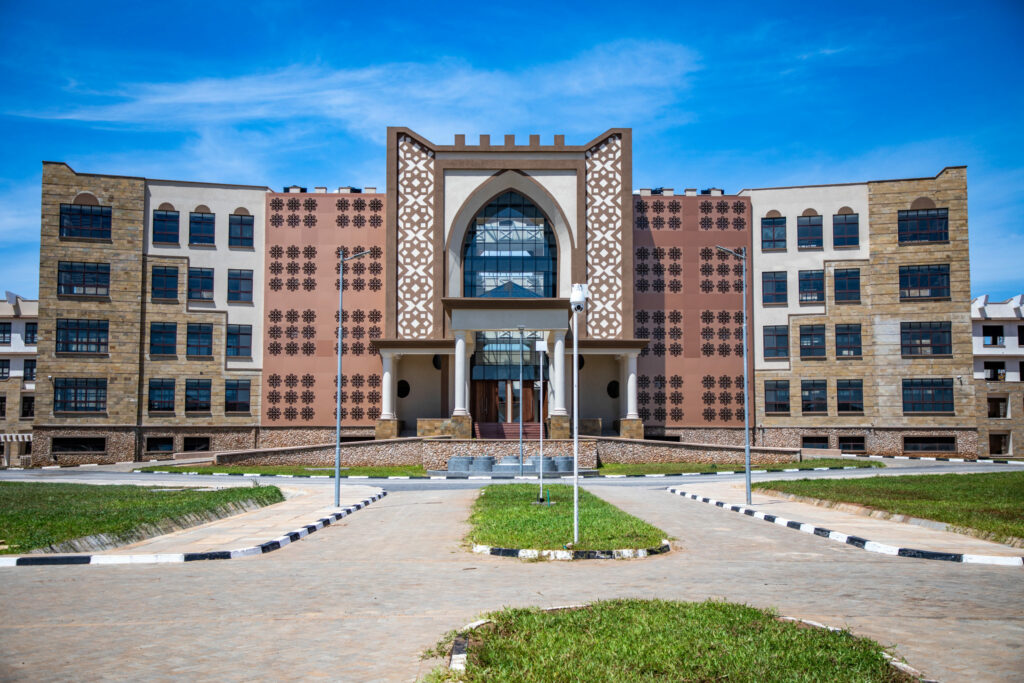
Behind the concrete, stalled timelines and billions of shillings attached to Ronald Ngala Utalii College is Mulji Devraj & Brothers Ltd, the construction company awarded the principal works contract in 2013 at approximately KSh8.961 billion.
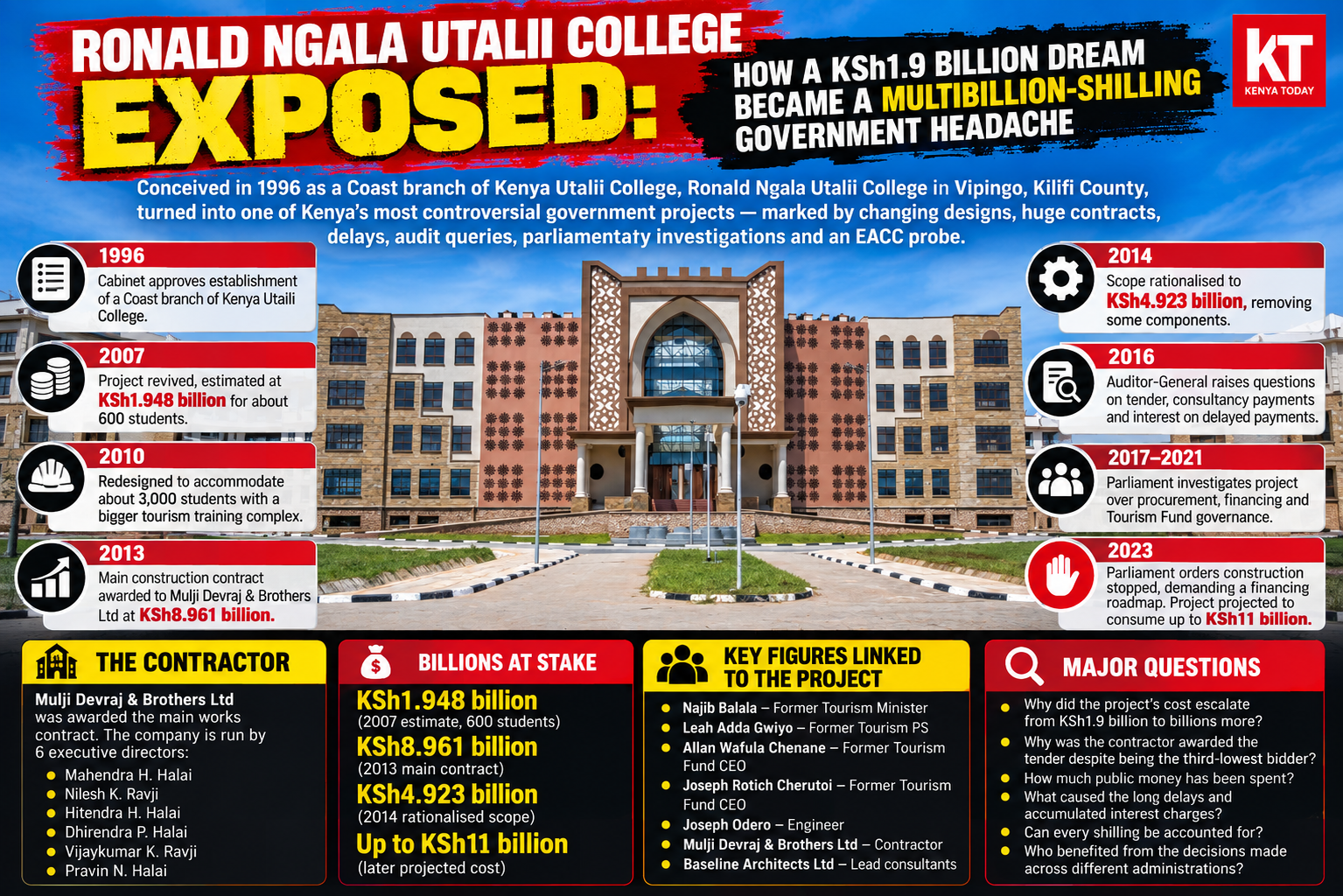
The company currently identifies its six executive directors as Mahendra H. Halai, Nilesh K. Ravji, Hitendra H. Halai, Dhirendra P. Halai, Vijaykumar K. Ravji and Pravin N. Halai, describing them as the team responsible for overseeing its engineering, mechanical, joinery, finance and administration divisions.
The names matter because Ronald Ngala would eventually move far beyond an ordinary government construction contract and become the subject of parliamentary scrutiny, Auditor-General queries and an EACC investigation into procurement and expenditure surrounding the project.
The project stretched across both the Mwai Kibaki and Uhuru Kenyatta administrations, accumulating a financial and political history that repeatedly attracted questions from Parliament and government auditors.
The main construction contract was entered into in May 2013 at KSh8.961 billion, despite the earlier Cabinet-approved figure associated with the project being approximately KSh1.948 billion.
The National Treasury subsequently raised concerns about funding, while government later rationalised the immediate construction scope to approximately KSh4.923 billion.
Years later, MPs were still interrogating why billions had been disbursed while the college remained incomplete.
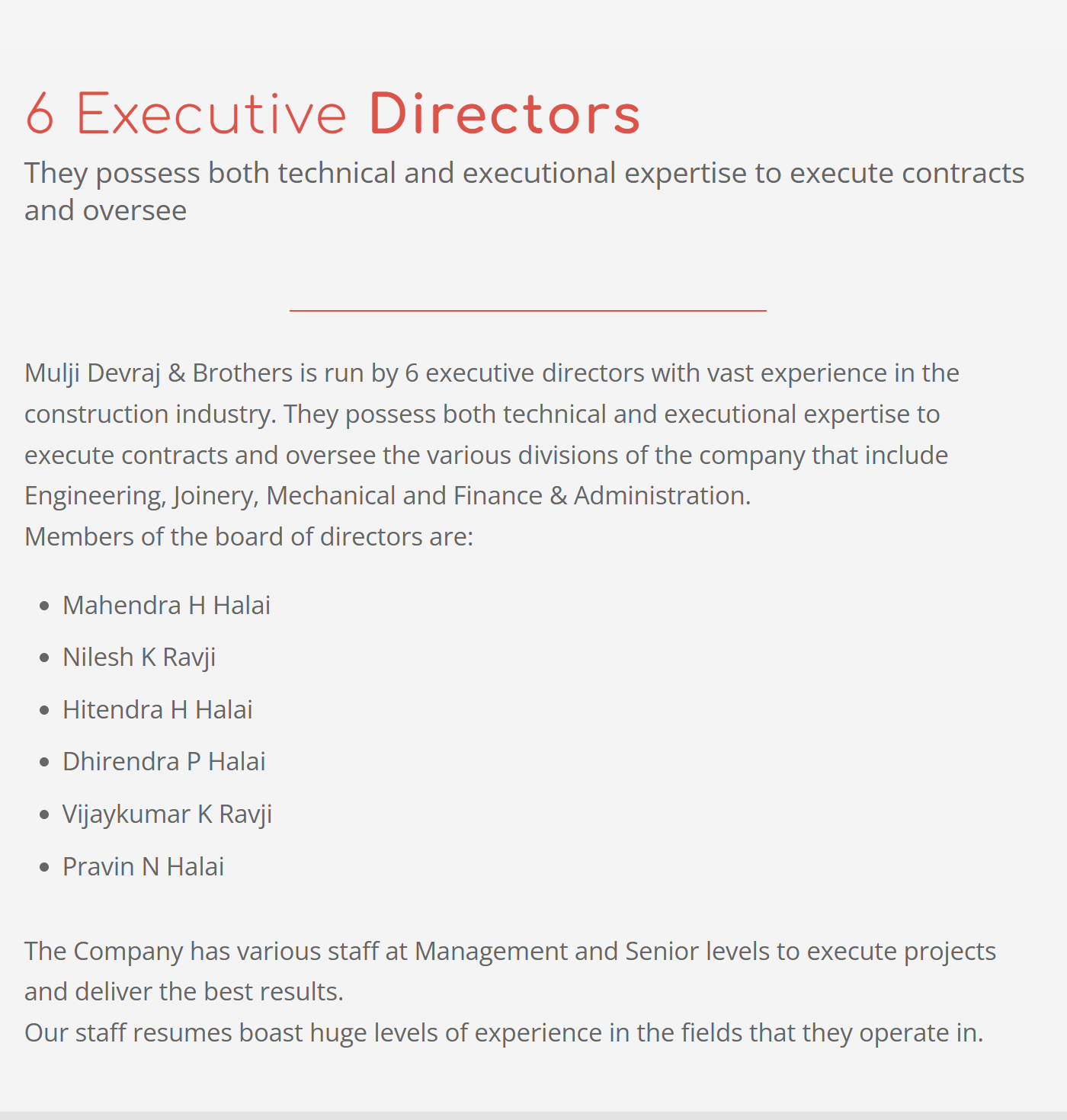
The questions became even sharper when then Auditor-General Edward Ouko examined the KSh8.9 billion tender.
His audit questioned why Mulji Devraj & Brothers had received the contract despite being the third-lowest prequalified bidder, with approximately KSh498.7 million separating its bid from the lowest bidder. Ouko also criticised contractual provisions involving a 10 per cent advance payment and interest charges for delayed payments, describing aspects of the contract as favouring the contractor.
The controversy eventually attracted the attention of the Ethics and Anti-Corruption Commission. In its official reporting, EACC said it investigated allegations concerning the award of the Ronald Ngala construction tender to Mulji Devraj & Brothers at KSh8,961,370,998.
The Commission recorded allegations that Tourism Fund had fraudulently paid approximately KSh8.5 billion towards the college and that the cost had risen dramatically from the earlier KSh1.95 billion figure. EACC subsequently recommended charges against several actors, including former officials, tender committee members and directors of Mulji Devraj & Brothers.
There was also an extraordinary political dimension. In 2016, then Treasury Cabinet Secretary Henry Rotich told Parliament that the Tourism Ministry had secured an additional KSh500 million through Parliament after Treasury declined to authorise the requested allocation.
MPs examining the matter questioned how the money had been approved, while Rotich told the Public Investments Committee that the project had moved from the earlier KSh1.9 billion Cabinet-approved figure to KSh8.9 billion without Cabinet backing for that escalation.
Some mps were receiving bribes and kickbacks to make sure the project was allocvated monye yearly with nothing to show on ground. Cartels never wanted this school to be opened because it would have killed their cash cow.
By then, Ronald Ngala Utalii College had become something much bigger than the tourism-training institution envisioned years earlier. It had become a multibillion-shilling project moving through two presidential administrations, repeatedly attracting questions about procurement, financing, consultancy payments, delayed-payment interest and parliamentary approvals.
The central question for this investigation is therefore not merely why the college took so long to complete, but who made the critical decisions, who received the billions paid through the project, what taxpayers ultimately received for that money, and whether every shilling can be properly accounted for.
For nearly three decades, Ronald Ngala Utalii College in Vipingo, Kilifi County, carried one of the most extraordinary histories of any public education project in Kenya.
Conceived as a straightforward plan to establish a Coast branch of Kenya Utalii College, the project eventually became associated with billions of shillings, changing designs, disputed procurement decisions, expensive delays, parliamentary investigations, Auditor-General queries and an Ethics and Anti-Corruption Commission investigation that eventually dragged former senior government officials and private consultants into court.
The names appearing at different stages of the project tell their own story. Former Tourism Minister Najib Balala, former Tourism Permanent Secretary Leah Adda Gwiyo, former Tourism Fund chief executives Allan Wafula Chenane and Joseph Rotich Cherutoi, Mulji Devraj & Brothers Ltd, Baseline Architects Ltd and other consultants would all feature at various points in the long-running history of the college. Some would later face criminal allegations, which they denied, although the prosecution ultimately ended without convictions.
But the Ronald Ngala story did not begin with an EACC investigation. It started with what appeared to be a sensible government idea almost 30 years ago.
The 1996 Dream That Refused to Become Reality
On February 1, 1996, Cabinet approved the establishment of a Coast branch of Kenya Utalii College. The reasoning was difficult to fault. Kenya’s Coast was already the heart of a substantial tourism economy, packed with hotels, resorts, restaurants, tour companies and other hospitality businesses requiring professionally trained workers.
Putting a specialised tourism college closer to that industry appeared both logical and necessary.
Yet years passed without the institution materialising.
Government revived the proposal in 2007, when the planned institution was estimated to cost approximately KSh1.948 billion and accommodate about 600 students. Financing was expected to take place over four years.
Even then, construction did not immediately take off. It was only in 2010 that the project moved substantially towards implementation under the Catering and Tourism Development Levy Trustees, later succeeded by Tourism Fund.
By then, however, the original idea was about to become considerably bigger.
In December 2010, the project was redesigned to accommodate approximately 3,000 students and incorporate significantly more infrastructure.
The concept had moved from a relatively modest Coast branch into an expansive tourism and hospitality training complex with academic facilities, accommodation and specialised practical-training infrastructure.
With the bigger ambition came a much bigger price tag.
Figures associated with the redesigned project moved towards approximately KSh8.9 billion.
That jump requires careful interpretation because the KSh1.948 billion proposal and the later multibillion-shilling development were not identical projects.
The scope and intended capacity had changed substantially. Nevertheless, the expansion opened an important question that would follow Ronald Ngala for years: was the size of the ambition properly matched with planning, approvals and money to pay for it?
Baseline Architects and the Consultancy Question
The next important chapter involved the procurement of professional consultants.
A consortium led by Baseline Architects Ltd was brought on board for professional services connected to the development. These were not peripheral responsibilities. Consultants on a project of this magnitude were involved in critical functions including design, documentation, supervision, certification and contract administration.
The consultancy procurement itself became the subject of a challenge before the Public Procurement Administrative Review Board and later the High Court.
What initially appeared to be a procurement dispute would acquire much greater significance years later as investigators and Parliament began examining consultancy arrangements and payments associated with Ronald Ngala.
The project was no longer merely about constructing classrooms in Vipingo. Billions of shillings were now attached to decisions being made around its design, construction and professional management.
Then came the main construction contract.
The KSh8.961 Billion Contract
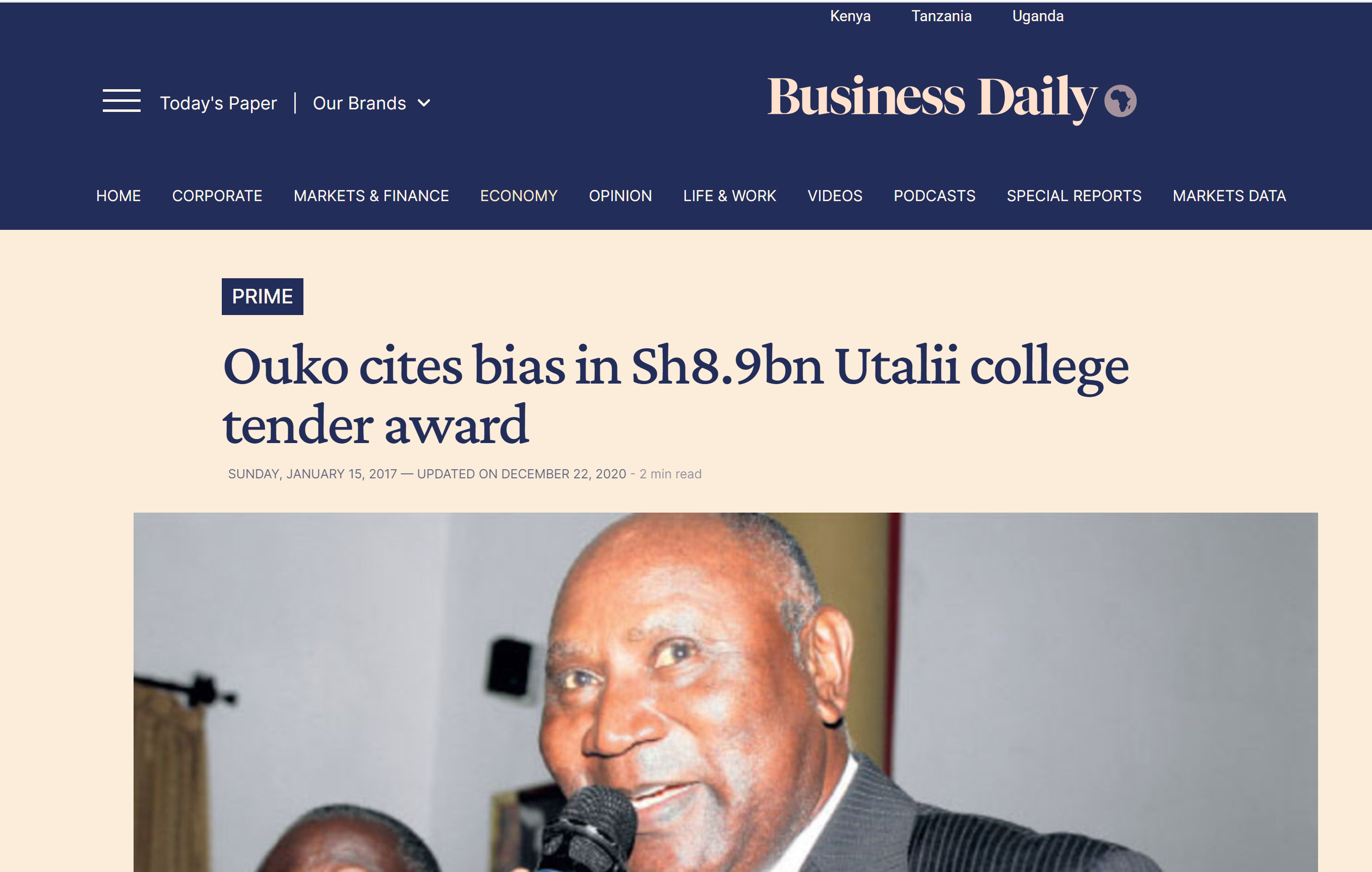
In 2013, Mulji Devraj & Brothers Ltd was awarded the principal works contract at approximately KSh8.961 billion.
It was a staggering financial commitment compared with the earlier KSh1.948 billion proposal, although, again, the scope of the institution had expanded significantly.
More importantly, financing problems quickly became impossible to ignore.
The government required substantial additional resources to meet contractual obligations. The National Treasury raised concerns surrounding the changed scale of the development and the financing required to sustain it.
That presented the government with a dangerous equation.
Construction contracts do not stop producing financial consequences simply because the Treasury is struggling to provide money. Once approved work is performed and certified, payment obligations can arise. When those payments are delayed, interest and other contractual claims can follow.
Ronald Ngala was therefore entering a cycle in which delays threatened to make an already expensive project even more expensive.
In 2014, the government rationalised the immediate construction programme to approximately KSh4.923 billion, reducing the immediate scope and separating some components, including the proposed hotel element.
But changing the scope could not turn back the clock.
Contracts had already been entered into. Consultants had already been engaged. Construction had started. Financial obligations were accumulating.
And the questions were growing.
When Delay Itself Became Expensive
One of the most troubling elements of the Ronald Ngala story was not simply how much the buildings cost. It was what happened when payments and completion repeatedly fell behind schedule.
Auditor-General reports would later document substantial expenditure associated with the project, including consultancy costs and the financial consequences of delayed payments.
By the 2021/2022 financial reporting period, Tourism Fund records showed cumulative interest charges running into billions of shillings across contractors and consultants associated with the project.
That is where the Ronald Ngala controversy becomes especially uncomfortable for taxpayers.
A delayed public project can create two losses simultaneously. The government may face additional financial obligations because payments have been delayed, while the public is still unable to use the asset it has been paying to construct.
For Ronald Ngala, classrooms, hostels, kitchens and other facilities could only produce their intended public value when students finally entered them. Every additional year of incomplete construction meant Kenya had capital tied up in infrastructure that was not yet delivering the tourism training for which it had been conceived.
By 2017, the controversy had grown sufficiently serious for the National Assembly’s Public Investments Committee to undertake an extensive investigation into the project.
The committee examined the establishment of Ronald Ngala, its redesign, consultant procurement, construction contracts, financing, rationalisation and governance arrangements within Tourism Fund.
The inquiry also examined an uncomfortable governance period.
Tourism Fund had gone through a dispute involving its Board of Trustees, including litigation following the revocation and replacement of board members. Parliamentary scrutiny later established that the Fund went for a significant period without a substantive board during years when important project decisions and commitments were being administered.
For a project involving billions of shillings, governance was not a technical footnote. Oversight structures mattered because somebody had to scrutinise expenditure, question management decisions and ensure contractual commitments were defensible.
Parliament returned to Ronald Ngala again in 2021.
The persistence of parliamentary scrutiny demonstrated that the fundamental questions had not disappeared.
Billions Committed, But Where Were the Students?
By 2022, Ronald Ngala remained unfinished.
Project reporting placed construction at roughly three-quarters complete, despite years of government expenditure and repeated promises surrounding completion.
That created perhaps the simplest question in the entire Ronald Ngala saga.
After all the years and all the billions, where were the students?
A tourism college ultimately exists to train people. Buildings, contracts, consultants and construction certificates are means to that objective, not the objective itself.
Yet Kenya had reached a situation where substantial public capital had been committed while the institution remained unable to fulfil its basic training mandate.
Walking away was hardly an attractive solution because billions had already been invested. Completing the institution required still more money. Further delays risked generating additional liabilities.
Government was effectively trapped between the cost of finishing Ronald Ngala and the consequences of leaving a multibillion-shilling investment unfinished.
Parliament Orders Construction Stopped
Then came one of the most dramatic interventions in the project’s history.
In March 2023, the National Assembly Departmental Committee on Tourism and Wildlife, chaired by Kareke Mbiuki, visited the project and directed the Ministry of Tourism to halt construction pending a parliamentary probe.
The committee demanded a clear financing roadmap from the National Treasury and answers about pending bills and penalties associated with delayed payments and inadequate funding.
Parliament said the project, whose rationalised arrangement had been associated with approximately KSh4.9 billion, was projected to consume up to KSh11 billion.
Think about that timeline.
Cabinet had approved the idea of a Coast tourism college in 1996. The project was revived years later. Its scope expanded. Consultants were procured. A KSh8.961 billion main construction contract followed. Government subsequently rationalised the immediate scope. Auditors raised questions. Parliament investigated. More years passed.
And in 2023, approximately 27 years after the original Cabinet decision, MPs were still demanding explanations about how the institution would be completed and what the final financial exposure would be.
The Ronald Ngala story was no longer simply one of a delayed government project.
It had become an accountability story.
Then EACC Entered the Picture
The Ethics and Anti-Corruption Commission had been investigating aspects of the project, including procurement, planning, budgeting, consultancy arrangements and payments through Tourism Fund.
EACC recorded allegations that approximately KSh8.5 billion had been paid towards establishment of the institution and investigated claims surrounding the movement from the earlier KSh1.948 billion proposal to the much larger project that eventually emerged.
Those were allegations under investigation, not findings of criminal guilt.
But the investigation would eventually produce something Ronald Ngala had not previously seen: criminal charges.
Former Tourism Minister Najib Balala, former Tourism Permanent Secretary Leah Adda Gwiyo, engineer Joseph Odero and other former officials and private consultants would eventually find themselves caught up in criminal proceedings arising from allegations connected to the project.
They denied the charges.
For the first time, questions that had spent years moving between audit reports, parliamentary committees, procurement disputes and government offices had landed squarely inside a criminal courtroom.
What happened next was just as remarkable.
The case did not end with convictions. The prosecution was subsequently withdrawn, the accused were discharged, and EACC publicly opposed the decision to terminate proceedings.
That extraordinary chapter deserves its own examination.