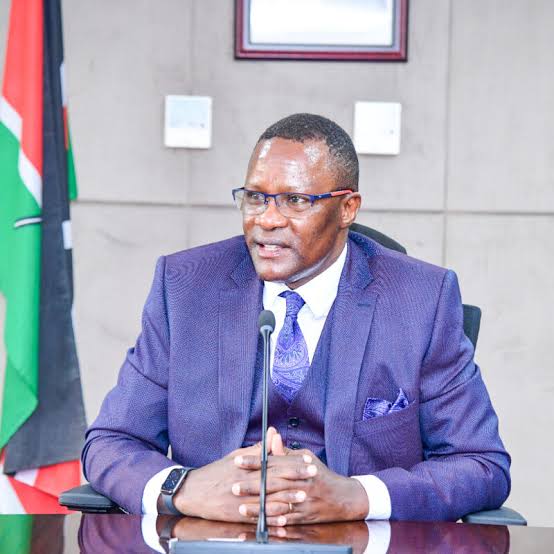
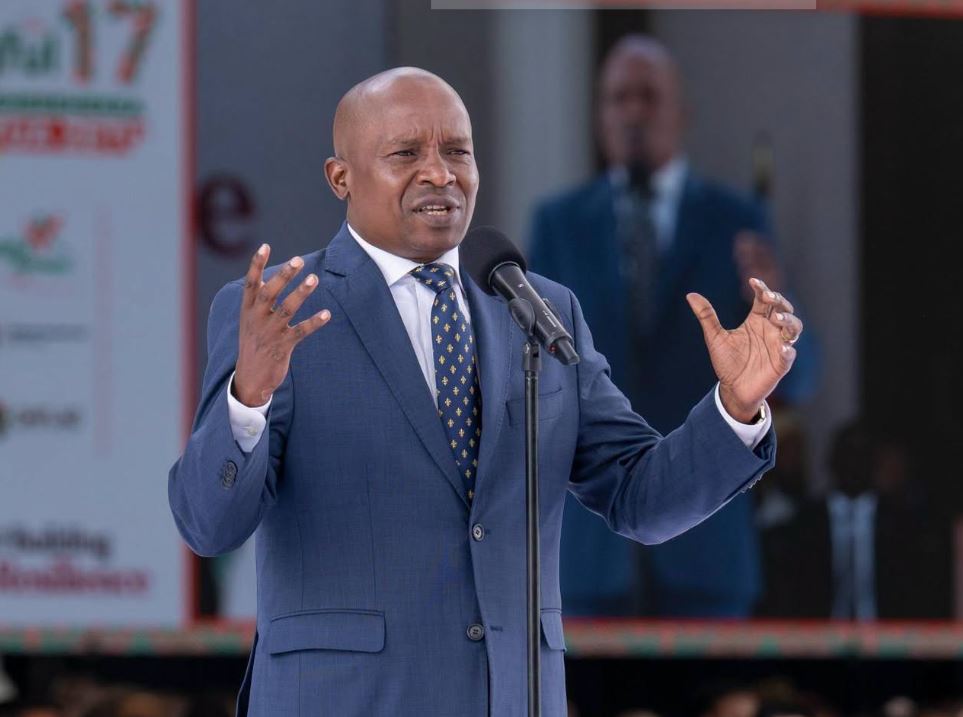
Members of the National Assembly Departmental Committee on Administration and Internal Security have questioned the recurrence of pending bills at the Office of the Deputy President, demanding an explanation for the expenditure and a reconciliation of conflicting figures reported by different government agencies.
The MPs raised concerns over the office’s management of public funds during a meeting on Tuesday to consider its proposals under the 2027 Budget Policy Statement (BPS) warning that the accumulation of unpaid bills could point to spending commitments being made without adequate budgetary provision.
Loima MP Hon. Protus Akuja told officials that the office had reported pending bills amounting to Sh552.6 million for the 2025/2026 financial year while the Public Administration and International Relations Sector Report put the figure at Sh569.8 million.
He called for a verified schedule to explain the difference.
“According to this report, in the financial year 2025/2026, the pending bill for this particular State Department was Sh552.6 million. Against another report by the Public Administration and International Relations Sector Report, which shows a pending bill of Sh569.8 million, can they be able to provide a reconciled and verified schedule? Because these are two contradicting reports,” said Hon. Akuja.
The committee chairman, Narok West MP Hon. Gabriel Tongoyo, questioned why the office continued to accumulate pending bills despite treating them as the first charge whenever funds were released.
He said the problem appeared to be not merely delays in the release of funds by the National Treasury, but also commitments made without corresponding budgetary allocations.
“You have been having carryovers or spillover of pending bills. For 2025/2026, about Sh440 million, and for 2026/2027, was it Sh500 million? The big problem, in my view, is all these pending bills that are incurred because of lack of provision of funds, as opposed to lack of liquidity,” Hon. Tongoyo said.
“It is better to have a pending bill because maybe the National Treasury delayed the releases, but it means there was no budget provided for. So you went ahead, procured services, and these are recurrent expenses which were not supported in the budget. Then we end up carrying some recurring pending bills. Maybe, was it even necessary in the first place? And what do we do so that we don’t continue to have such a situation?”
The office’s Chief Finance Officer told the committee that pending bills were given priority whenever funds were received and that the office regularly approached the Treasury for additional allocations to clear the outstanding amounts.
“In the Office of the Deputy President, we ensure that pending bills form the first charge on the allocated budget. To reduce the pending bills, we always request the National Treasury to consider us for additional funding to reduce the bill,” the finance officer said.
However, officials told the committee that the outstanding balance had since fallen to about Sh150 million, with a significant proportion of the bills attributed to hospitality expenses.
Hon. Tongoyo insisted that the office needed to put measures in place to avoid repeatedly committing itself to expenditure that was not supported by approved budgets.
Principal Administrative Secretary Mr. Moses Mbaruku said the office had to prioritise constitutional obligations, including the Intergovernmental Budget and Economic Council (IBEC), engagements with development partners and duties assigned to the Deputy President by the Constitution.
“Reduced budget definitely will go to the issues that are extremely binding, the constitutional issues like issues on IBEC. We have to deal with that and the issues on our development partners, and finally all the issues that will be delegated to the Deputy President by the President, because that’s the Constitution,” Mr. Mbaruku said.
“So we deal with the constitutional issues first. Then we can now get to other issues after we have done with the constitutional matters.”
The MPs also questioned the office’s spending patterns after its officials indicated that 44 per cent of the budget had been utilised in the first quarter.
Saku MP Hon. Ali Dido Rasso, the committee’s vice-chairperson, said the rate of expenditure was worrying given that government spending normally accelerates in the second and third quarters.
He sought an explanation of how the office intended to avoid running out of funds before the end of the financial year and resorting to Article 223 of the Constitution to seek additional spending authority.
Mr. Mbaruku later clarified that the 44 per cent figure did not reflect development expenditure and said the rate of spending was higher when recurrent expenditure was considered.
He attributed the high spending to the settlement of pending bills and the cost of running the office, including coordination of high-level government engagements and the Deputy President’s supervision activities across the country.
“It is true we have used 44 per cent, and there is that possibility of running out of money. One of the reasons why we have spent that much within the first quarter and part of the second quarter is because of the issues of pending bills, which are of course of concern to both us and this committee,” he said.
Mbaruku added: “The first charge, like we have rightly reported, is on the pending bills, which we are again servicing. Then the second thing is that we have still continued with the normal operations.”
He said the office had requested about Sh7 billion but expected to receive approximately Sh4 billion, arguing that the allocation would be insufficient to meet all its operational requirements.
“That’s why we are saying we have requested for Sh7 billion. We are getting about Sh4 billion. If you are okay with that, it will mean that we are almost just getting half, or slightly more than half, of what our needs for that financial year would be,” he said.
The committee also sought details on funds released to government agencies and institutions following meetings convened by the Deputy President to coordinate preparations for the anticipated El Niño rains.
Hon. Rasso asked what would happen to the money if the expected rains did not materialise and how the funds would be accounted for.
“What happens if El Niño does not happen? What happens to those monies? Are they going to be returned? How will those monies be accounted for? And maybe you can share with us how much has been disbursed so far,” he asked.
Mr. Mbaruku said the Deputy President’s office had coordinated the meetings, but the money was disbursed to the relevant State departments and organisations, not retained by the office.
He said the National Treasury would determine how any unutilised funds would be handled, but was unable to provide the total amount disbursed.
On development projects, Elgeyo Marakwet Woman Representative Hon. Caroline Ngelechei questioned the slow progress of planned refurbishment works at the Karen and Mombasa residences, whose combined allocation was cited at Sh70 million.
She noted that development expenditure had so far gone towards Harambee House Annex and sought an update on the cost, status and timelines of the remaining projects.
Mr. Mbaruku assured the committee that the three projects would be undertaken within the current financial year, preferably by March.
“I wish to confirm that the three projects will be undertaken within the financial year, preferably before that quarter, that is March,” he said.
He added that preparatory work was ongoing, including the processing of bills of quantities for some of the projects.