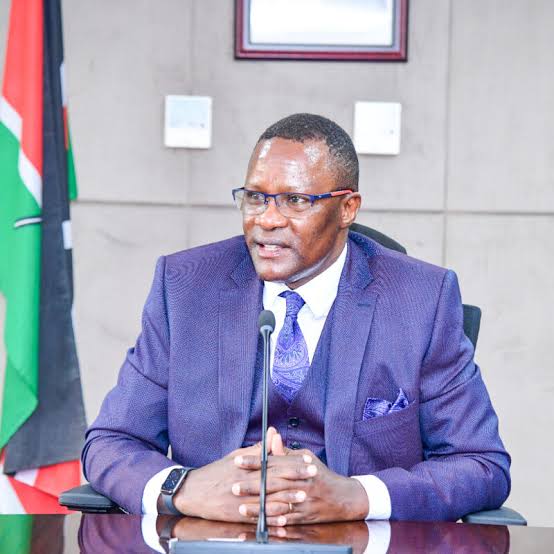
2027 presidential aspirant Eliud Owalo has called for the retention of live streaming of election results, arguing that real-time public access to the vote-counting process is essential for safeguarding the credibility and integrity of Kenya’s elections.
In a statement issued on Tuesday, Owalo said transparency should remain at the heart of the country’s electoral system, warning that any move to reduce public visibility of the results transmission process could erode confidence in future elections.
According to the former Cabinet Secretary, Kenya’s democracy depends on the trust citizens have in the fairness, openness and credibility of elections.
“At every moment when we consider changes to our electoral laws, we must be guided by one simple but important question: Will this strengthen public trust, or will it create doubt?” Owalo said.
His remarks come amid growing debate over proposals to review aspects of Kenya’s electoral framework ahead of the 2027 General Election, including discussions around the technology and procedures used in transmitting election results.
Owalo defended live streaming of polling station results, saying it enables voters, political parties, election observers, the media and other stakeholders to witness the declaration of results in real time, thereby strengthening public confidence in the electoral process.
He argued that livestreaming should not be viewed as a substitute for official election procedures but as one component of a broader transparency framework alongside electronic results transmission, physical tallying, public access to statutory forms, independent observation and media scrutiny.
“These processes should work together to strengthen the integrity of the electoral process,” he said.
Drawing from Kenya’s electoral history, Owalo warned that limiting public access to information could fuel suspicion, misinformation and political tension.
“When citizens feel excluded from information, suspicion grows. When suspicion grows, misinformation spreads, political tensions rise, and confidence in institutions is weakened,” he stated.
Instead of scaling back transparency measures, Owalo called for reforms aimed at strengthening the systems that support election technology.
He proposed enhanced verification procedures, stronger cybersecurity measures, better protection of transmission infrastructure, credible audits and improved record preservation.
He maintained that protecting the integrity of official election results and allowing citizens to observe the process in real time are complementary objectives rather than competing ones.
“Transparency should never be seen as a burden. It is a democratic duty,” he said.
Owalo concluded by urging policymakers to retain live streaming as part of Kenya’s election transparency architecture, saying the country’s focus should be on building greater public confidence in the management of elections rather than reducing openness.
“Our duty should be to protect the vote, strengthen verification, and ensure that every Kenyan can have confidence in both the process and the final result,” he said.
The debate over electoral reforms is expected to intensify as political parties, the Independent Electoral and Boundaries Commission (IEBC), Parliament and civil society continue discussions on legal and technological changes ahead of the 2027 General Election.