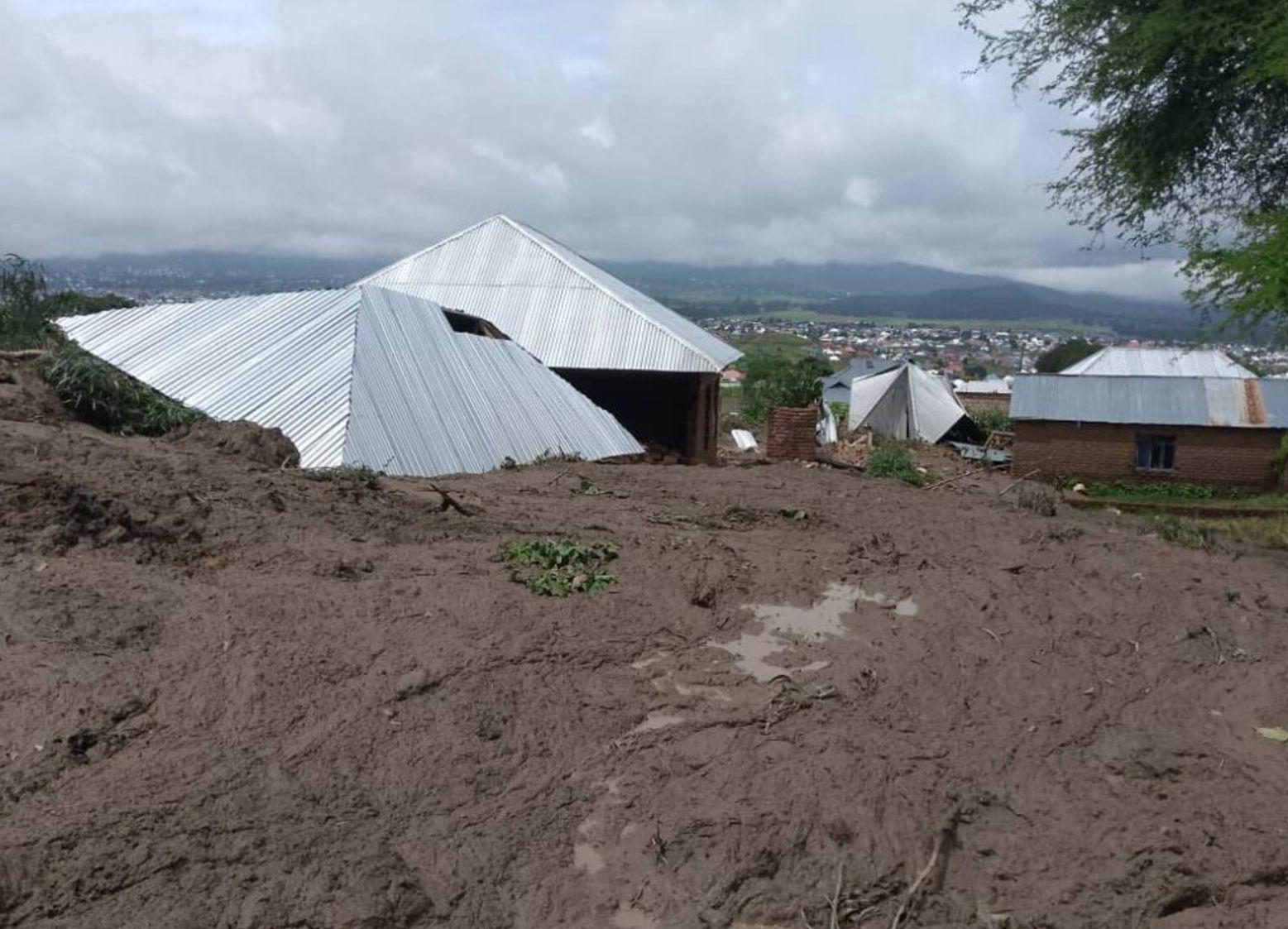
More than 80 households have been left homeless after heavy rainfall and flooding destroyed homes, businesses and livestock in Nzovwe Ward, Mbeya City, Tanzania.
The incident occurred on Tuesday, November 3, 2026, when a heavy downpour accompanied by hailstones struck the area, reportedly lasting approximately 10 minutes and triggering flash floods that swept through residential neighbourhoods.
Residents said they lost nearly all their belongings, with some families now uncertain where they will spend the night.
Halima Chang’a, one of the affected residents, said she managed to rescue her children but lost everything inside her house after floodwaters swept through the neighbourhood.
Another resident, Emmy Kyando, said she lost household belongings and chickens, while expressing concern about her child’s safety after the child swallowed water during the flooding.
Yohana Mwakaju, whose businesses were also affected, called on the authorities to address drainage challenges in the area, arguing that the existing infrastructure could not adequately handle water flowing from higher ground.
He particularly raised concerns about drainage along a road undergoing expansion, saying the construction should be accompanied by improvements to the drainage system to prevent further flooding.
Authorities order residents to leave high-risk areas
Mbeya Regional Commissioner Jumanne Sagini has directed residents living in high-risk areas to temporarily relocate to safer locations as the region prepares for more rainfall.
Speaking after visiting affected families on Wednesday, November 4, Sagini warned that the damage caused by the relatively short rainfall should serve as a warning of the potential danger posed by prolonged downpours.
READ: Ebola Outbreak: Kenya Discharges Five Patients as More Than 5,000 Die Across Africa
He also directed disaster management committees to ensure affected households receive emergency assistance, including food and mattresses.
The regional commissioner confirmed that no deaths had been reported in the incident. Some displaced families have sought temporary shelter with relatives and neighbours.
Sagini further said the Tanzania National Roads Agency (TANROADS) had started addressing vulnerable sections of the drainage infrastructure identified as contributing to the flooding.
El Niño raises concerns over further flooding
The flooding comes as the Tanzania Meteorological Authority (TMA) warns of average to above-average rainfall across several parts of the country during the November 2026 to April 2027 rainy season.
In its seasonal outlook issued on October 23, TMA identified Mbeya, Songwe, Rukwa, Iringa, Njombe, Dodoma, Singida, Tabora, Katavi and Kigoma among the regions expected to experience normal to above-normal rainfall.
The authority warned that rainfall would likely be heavier during the first half of the season, between November 2026 and January 2027, with strong El Niño conditions expected to influence the weather pattern.
Potential impacts include flooding, damage to infrastructure, crop losses and disruptions to transport.
The Mbeya incident highlights the vulnerability of communities living in areas with inadequate drainage systems, particularly as the rainy season intensifies.
For affected families, the immediate priority is finding safe shelter and recovering from the loss of homes and livelihoods. For local authorities, the challenge is ensuring that drainage improvements, early warnings and emergency response measures are in place before further heavy rainfall occurs.
With more rain expected, residents have been urged to avoid flood-prone areas and follow official weather and safety advisories.