
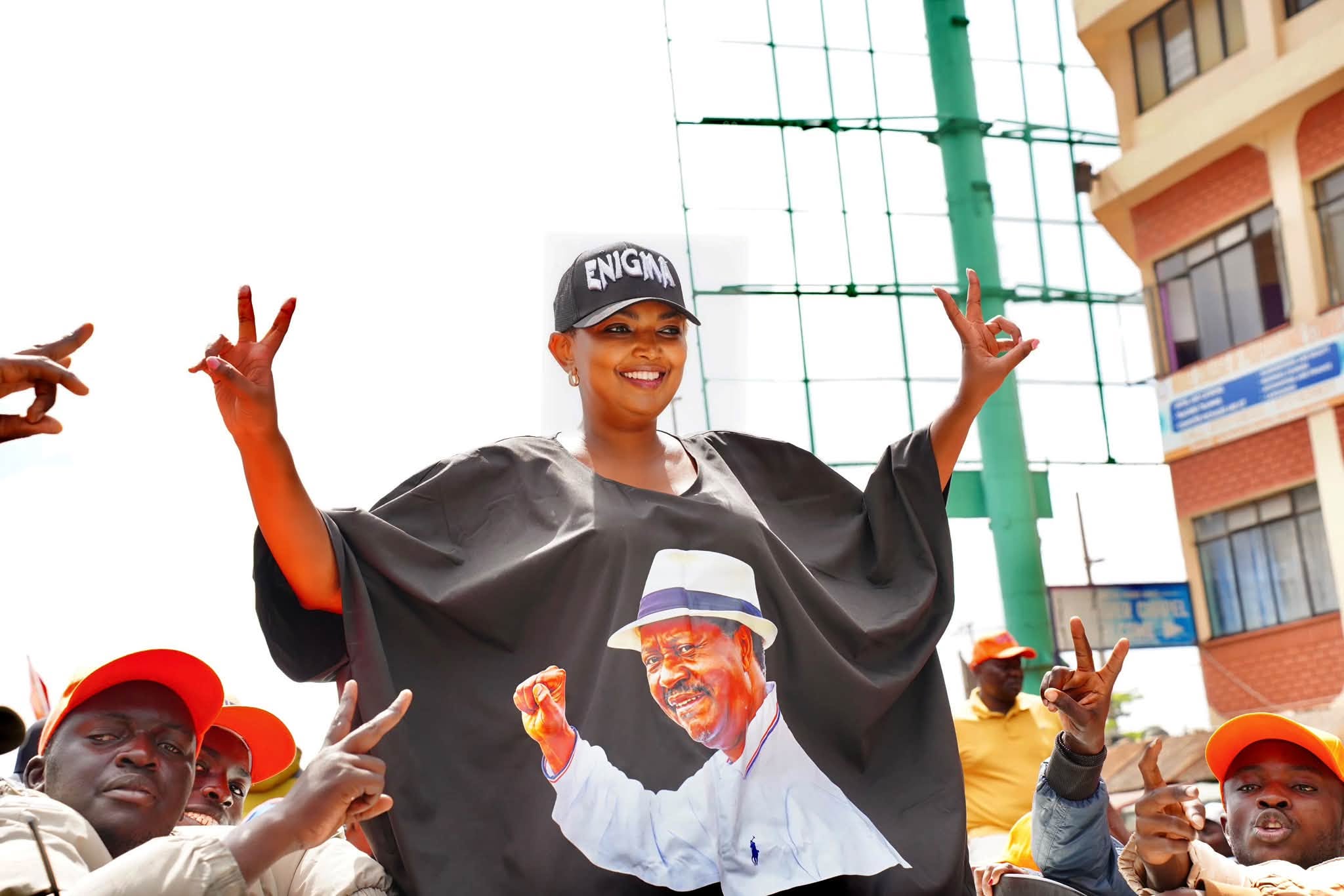
As she prepares to challenge for the Nairobi Woman Representative seat, the nominated senator is increasingly presenting herself as a politician of action, women’s empowerment and grassroots engagement.
Karen Nyamu has never been a politician who struggles to make her presence felt.
Outspoken, confident and rarely hesitant to express her views, the nominated senator has built a public profile around her willingness to engage in conversations that often place her at the centre of political debate.
Whether speaking about government policy, defending her political positions or addressing issues affecting ordinary Kenyans, Nyamu has cultivated a style of politics that relies heavily on visibility and direct communication.
But beyond the headlines and political exchanges, the senator is now pursuing a bigger ambition: becoming Nairobi’s next Woman Representative.
With the 2027 General Election approaching, Nyamu is increasingly taking her political activities to the grassroots, engaging women, young people, boda boda operators and community organisations as she seeks to expand her influence in Kenya’s capital.
Her declaration that she intends to contest the Nairobi Woman Representative position has provided a clearer picture of where she wants her political career to go next.
Speaking during an interview with Radio Generation on October 23, 2026, Nyamu confirmed that she would contest the seat and planned to begin her campaign in November 2026.
She explained that she had deliberately held back from launching her political mobilisation too early, arguing that timing was an important consideration in an election campaign.
“I’m actually vying for Woman Rep Position for Nairobi. I’m planning to start campaigning in November. I’ve been holding back because you know in politics, timing is everything. You can get burnout very early before even the game starts,” she said in part.
The remarks offered a glimpse into her approach to the coming election: an awareness that political visibility must be sustained and that building momentum requires more than making an early announcement.
For Nyamu, the Nairobi Woman Representative seat represents an opportunity to move from her current position in the Senate to a directly elected mandate, giving her a platform to represent women in one of the country’s most politically competitive counties.
A politician who is comfortable speaking her mind
One of the defining features of Nyamu’s public profile is her outspoken nature.
She is rarely absent from conversations surrounding the country’s political direction, and her willingness to articulate her positions has helped establish her as a recognisable political figure.
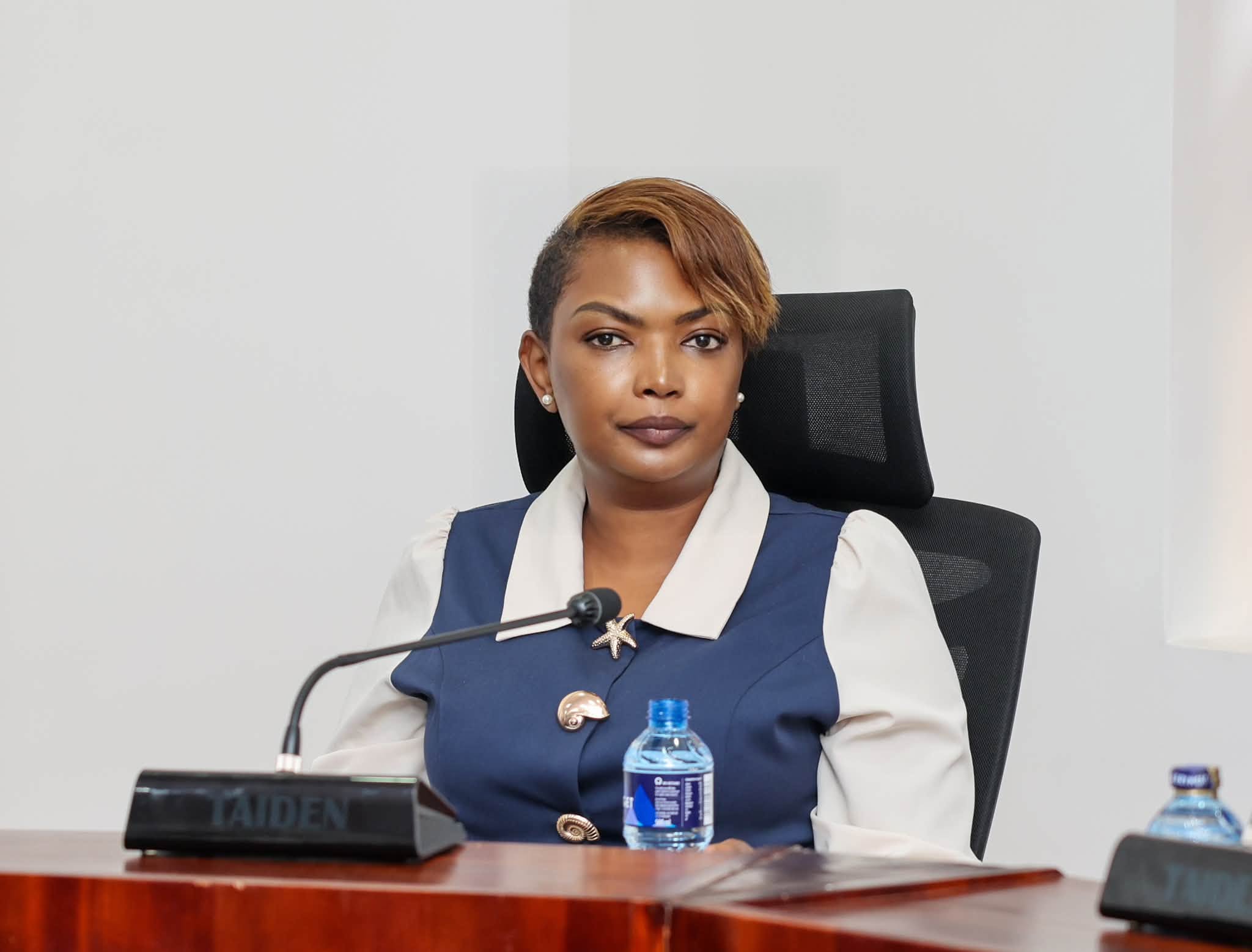
Her November 5 interview on TV47 Breakfast offered another example of this approach.
Discussing the Nairobi Woman Representative contest, Nyamu openly argued that the United Democratic Alliance (UDA) deserved to secure the seat in the 2027 elections.
She pointed to the party’s presence in the Nairobi County Assembly, saying it had approximately 31 elected and nominated Members of County Assembly.
“UDA is the party that has delivered in Nairobi. Every other thing you see that has been achieved in Nairobi has been done under a UDA government,” she said.
Her argument was not simply about her personal ambition. It was also an attempt to establish why she believes her political party should have a place in the next leadership arrangement in Nairobi.
She maintained that UDA had a political presence in the capital that could not be ignored.
This ability to connect personal ambitions with broader party interests is an important part of her political positioning.
Nyamu understands that securing an elective seat involves more than declaring an intention to run. It also requires negotiating within party structures, building alliances and convincing political stakeholders that a candidate has something to offer.
Her public statements suggest she is prepared to engage in those conversations openly.
I would shorten the section and retain her exact words as a direct quote. Place it after the paragraph on her grassroots engagements:
Reconnecting with her roots
Nyamu is also drawing on personal relationships built over the years. On November 25, 2026, she met elders in Dagoretti South, where she donated essential goods to them and shared her ambition to represent Nairobi women in 2027.
In a statement after the meeting, she wrote:
“Engaged with our elders in Dagoretti South today and shared my ambition to serve Nairobi as Woman Representative in 2027. They helped raise me here in Nairobi. Now it’s my turn to show up for them the way they showed up for me.”
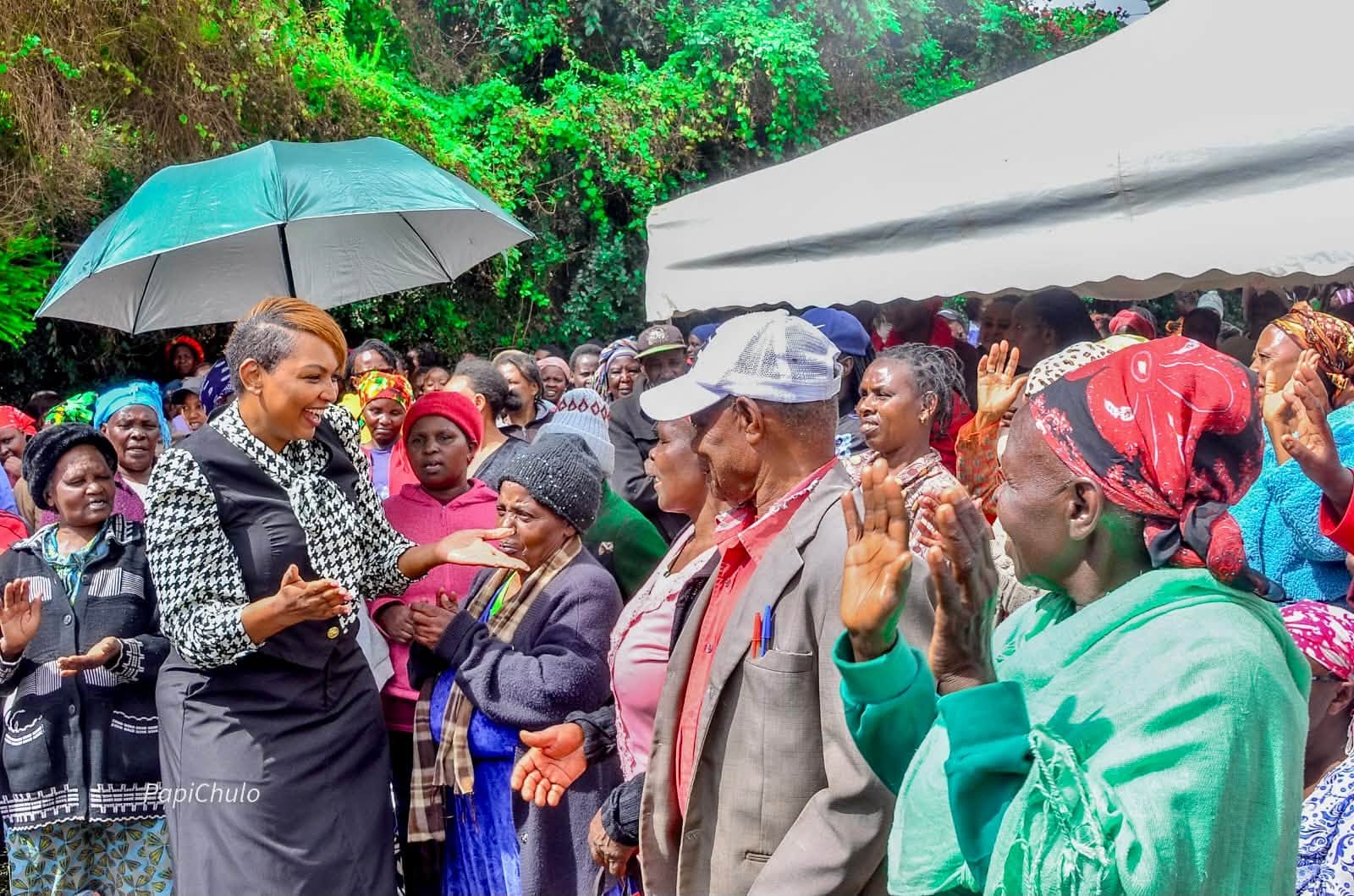
The message adds a personal dimension to her campaign, presenting her Nairobi political ambition as more than an electoral pursuit: a desire to give back to a community she says helped shape her.
This is concise, keeps her words verbatim and gives the profile a warmer, more personal angle without suggesting the elders formally endorsed her.
Taking her politics to the grassroots
Perhaps the clearest indication of how Nyamu intends to approach the 2027 contest is her growing engagement with grassroots communities.
On November 14, she announced an initiative involving more than 5,000 Nairobi boda boda riders under Boda Boda Christian Ministries.
The senator said she had facilitated an affordable housing and Social Health Authority (SHA) registration drive for the riders.
She also announced that she had sponsored riding classes and licensing for 200 operators, describing the initiative as an effort to promote road safety and create better opportunities for young people working in the informal transport sector.
Her engagement went beyond the registration exercise.

Nyamu said she would champion the riders’ demands for smaller affordable housing instalments and a special SHA tariff, while also raising concerns about police harassment and the repossession of motorcycles by financing companies.
“Police harassment of our riders must stop,” she said in a statement addressing the challenges facing the operators.
She also appealed to motorcycle financing companies, particularly Mogo Kenya, to reconsider their approach to delayed repayments, arguing that repossessing motorcycles makes it more difficult for riders to recover financially.
On November 23, 2026 she reported meeting the first cohort of 200 riders whose training and licensing she was sponsoring.
The initiative is significant in understanding the type of political constituency Nyamu appears keen to build.
Boda boda operators form part of Nairobi’s extensive informal economy, supporting thousands of livelihoods and connecting communities across the county.
By engaging the sector on matters ranging from healthcare to affordable housing and road safety, Nyamu is placing herself in conversations that directly affect the economic wellbeing of ordinary residents.
It is also a practical illustration of her preferred political approach: combining public advocacy with visible community engagements.
A woman who wants to champion other women
Women’s economic empowerment is another central theme in Nyamu’s proposed agenda.
During her October interview, she said she wanted to see more women succeed in business, highlighting the importance of financial support and opportunities that could enable them to establish sustainable livelihoods.
She also spoke about young mothers who leave school before completing their education and subsequently struggle to acquire the skills necessary to support themselves and their children.
According to Nyamu, some of these women reach adulthood without the qualifications or practical skills needed to secure reliable livelihoods.
She said she wanted to help them acquire skills that would improve their economic independence.
“I really want to make sure that women are thriving in business,” she said.
The proposal speaks to a wider challenge facing women in Nairobi, particularly those from economically disadvantaged households.
Access to capital, training, education and employment opportunities remains important in determining whether women can establish businesses and achieve financial independence.
For an aspiring Woman Representative, these are issues that provide an opportunity to demonstrate how political representation can translate into tangible interventions.
Her November 17 remarks on women’s participation in leadership also revealed another aspect of her thinking.
She observed that the difficult political environment can discourage women from seeking leadership positions, arguing that women’s lived experiences bring valuable perspectives to legislation, particularly on matters affecting families.
It is a message that connects her political ambition with the wider question of women’s representation in decision-making.
Endometriosis advocacy: Taking women’s health to Parliament
Beyond economic empowerment, Nyamu has also been involved in advocacy around women’s reproductive health.
Her engagement with endometriosis awareness in September provided one of the clearest examples of her willingness to take up an issue that affects many women but receives relatively little public attention.
On September 27, she attended an endometriosis awareness event organised by media personality Natalie Githinji at the Kenyatta International Convention Centre.
“I am not here for politics. I’m sure you know me and you know I don’t care,” she said when some started heckling.
More importantly, her involvement extended beyond the public event.
ALSO READ: Karauri Proposes Free Content-Creation Hubs for Nairobi Youth
On September 10, she gave notice of a Senate motion seeking the establishment of a national framework for the diagnosis, treatment and management of endometriosis in Kenya.
The proposed framework addresses the need for reliable national data, specialised treatment capacity and better coordination of services for women living with the condition.
Nyamu credited Githinji for bringing the issue to her attention, acknowledging the role played by public advocacy in pushing the matter into parliamentary discussions.
Her involvement provides a concrete example of how an issue raised by members of the public can find its way into the legislative process.
It also gives her a platform to demonstrate that women’s representation should extend beyond political appointments and election campaigns to matters affecting their health, dignity and quality of life.
The political calculations behind her Nairobi ambition
While Nyamu is building a public profile around grassroots engagement and women’s empowerment, her journey to the Nairobi Woman Representative seat places her in potential competition with incumbent Esther Passaris, who has represented Nairobi women in the National Assembly since 2017.
Passaris has indicated that she intends to defend her seat in 2027, setting up a potentially interesting contest between two women with established public profiles.
The issue became particularly clear during Nyamu’s November 5 interview on TV47.
Asked about the possibility of UDA and ODM fielding competing candidates under their broad-based political arrangement, Nyamu said the parties would have to agree on how to distribute elective positions.
She argued that the arrangement would not allow the two parties to field candidates against each other in the same races.
When asked whether either she or Passaris could eventually be required to step aside depending on the negotiations, she responded: “Definitely. 100 per cent.”
The response revealed that Nyamu is conscious of the political realities that could shape her ambition.
For now, however, the question of who eventually gets the ticket remains open.

Beyond the headlines: The politician behind the ambition
Nyamu’s political journey is increasingly becoming a story about balancing public visibility with the substance of political representation.
Her outspoken nature has made her a recognisable figure, but her recent engagements suggest she wants her political identity to be associated with more than public exchanges and political controversies.
From supporting boda boda riders to advocating for women living with endometriosis, she has been placing greater emphasis on issues that affect ordinary households.
Her approach also reflects an understanding that Nairobi politics requires engagement with different communities and economic groups.
The city is home to people whose priorities range from business opportunities and employment to affordable housing, healthcare, education and transport.
Any candidate seeking to represent Nairobi women must demonstrate an understanding of these different realities.
For Nyamu, the coming months will provide an opportunity to turn her proposals and public engagements into a more comprehensive agenda for the county.
She will also have to convince voters that her experience in the Senate, her advocacy work and her proposed programmes make her the right person to represent them.
But Nyamu appears determined to pursue the opportunity.
Her decision to begin campaigning in November, her engagements with community groups and her public defence of UDA’s political interests all point to a politician preparing for a bigger electoral test.