
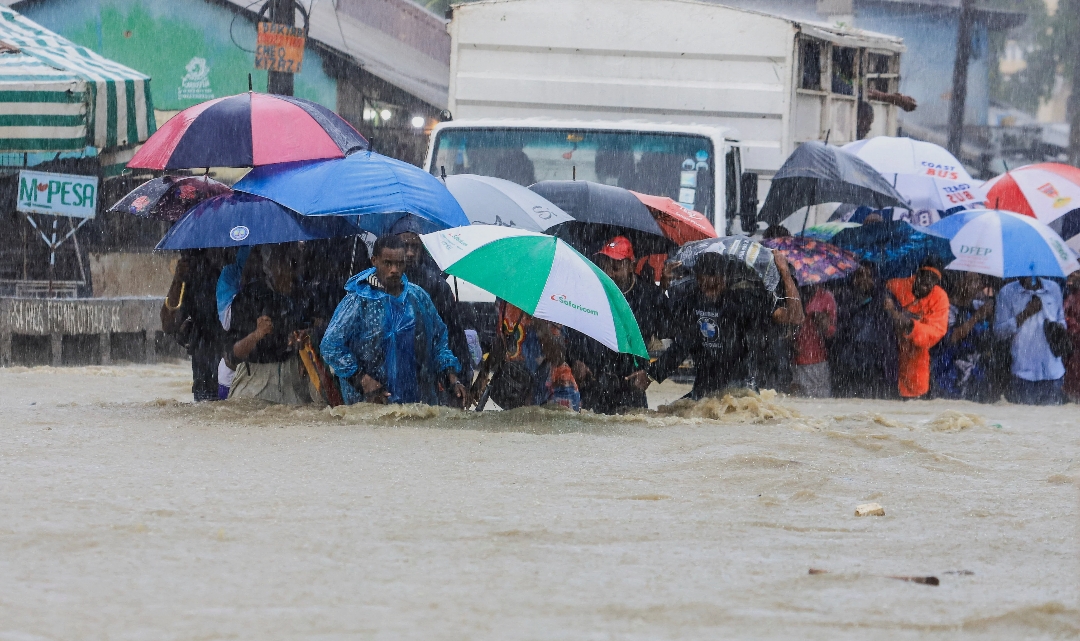
Kenyans should prepare for an unusually wet October-to-December season, with above-average rainfall forecast across most parts of the country as a strengthening El Niño and the possible development of a positive Indian Ocean Dipole are expected to influence the 2026 “Short Rains”.
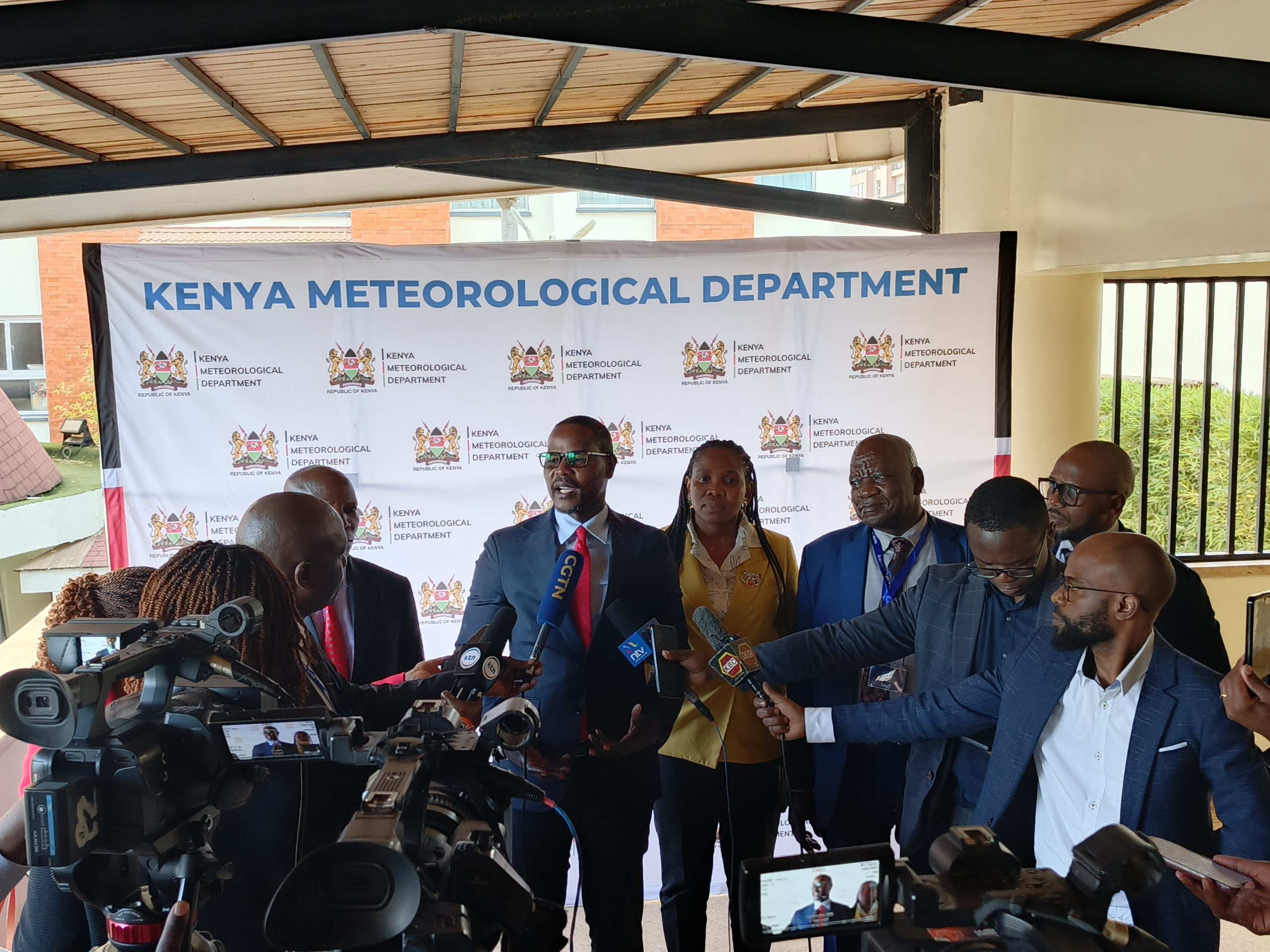
The Kenya Meteorological Service Authority (KMSA) says the enhanced rainfall could bring both opportunities and risks, with communities urged to remain alert for prolonged wet spells and occasional isolated storms.
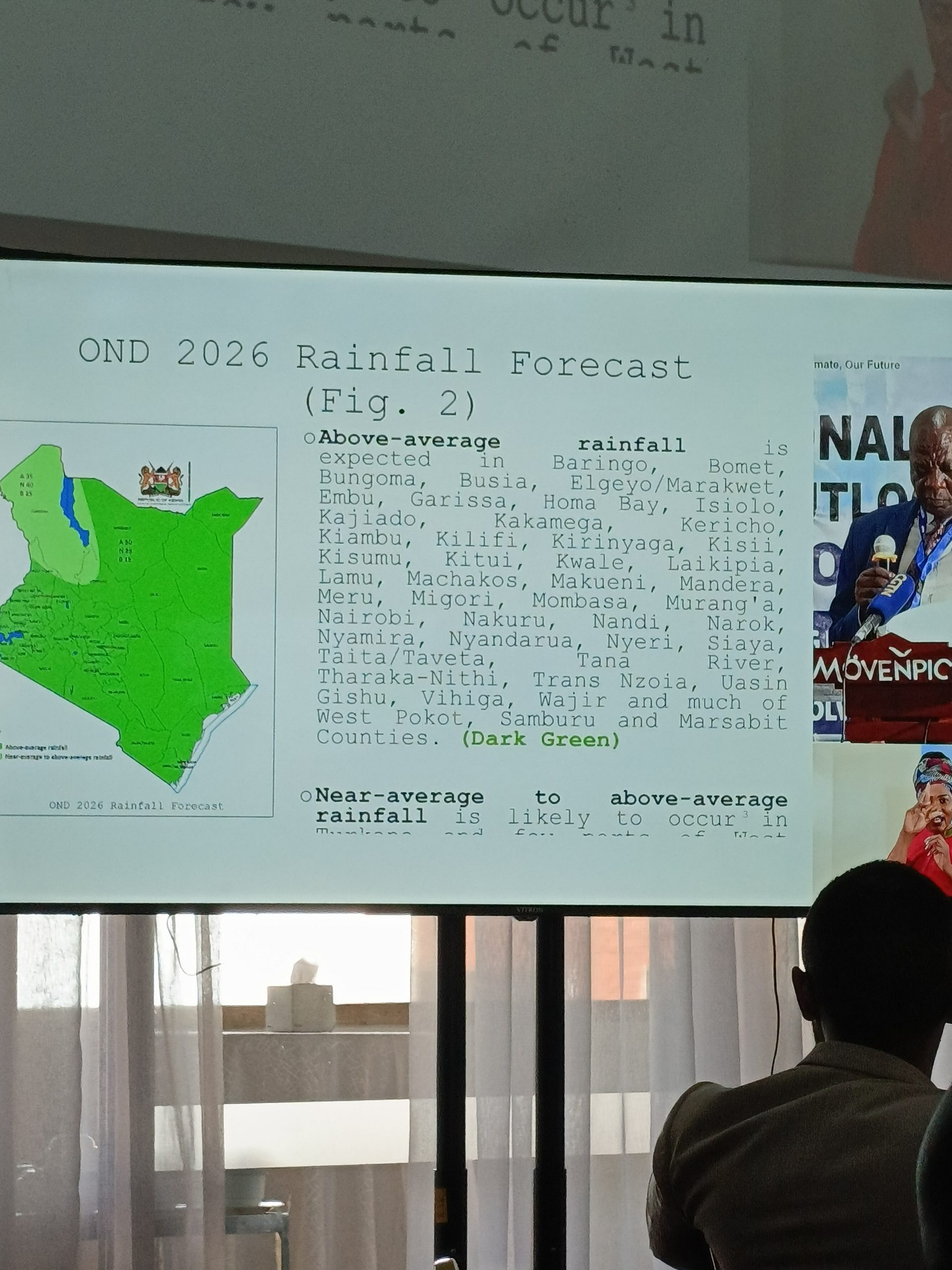
According to the technical statement issued following the 13th National Climate Outlook Forum (NCOF13), above-average rainfall is expected across a wide area of the country, including Nairobi, Kiambu, Nakuru, Kisumu, Kakamega, Mombasa, Kilifi, Kwale, Garissa, Wajir, Mandera, Isiolo and Tana River, among other counties.
The forecast comes as the 2026 El Niño event continues to strengthen over the central-eastern equatorial Pacific.
KMSA says the Niño 3.4 index reached a seasonal mean of +1.51°C between May and July 2026, while the July monthly value rose to +2.03°C. The weekly index centred on August 12 reached +2.7°C, indicating that the event is evolving towards what the authority describes as a very strong El Niño.
The Indian Ocean Dipole, another major driver of East Africa’s rainfall, is currently neutral but is expected to strengthen, with forecasts indicating it could surpass the positive threshold from September, although uncertainty remains over its timing and strength.
Rains Expected to Be Well Distributed
Beyond the amount of rainfall expected, the outlook points to a season that could be fairly to well distributed in both time and space across several parts of Kenya.
However, the distribution is expected to be poor to fair over Turkana and Samburu.
The season is also likely to be characterised by prolonged wet spells and occasional isolated storms, raising the possibility of both beneficial rainfall for agriculture and water resources, as well as weather-related disruptions in vulnerable areas.
For the Coast, including Mombasa, Kwale, Kilifi and Lamu, as well as the Tana Delta, the rains are expected to begin between the second and third weeks of October and cease between the first and second weeks of December.
Nairobi and several counties in the central region, including Kiambu, Nyeri, Kirinyaga, Murang’a, Meru, Embu and Tharaka-Nithi, are expected to experience the onset between the second and third weeks of October, with the rains likely to continue into January.
Meanwhile, parts of western Kenya and the Rift Valley are expected to continue receiving rainfall from September into January, while Machakos, Kitui, Makueni, Kajiado, Taita-Taveta and inland parts of Tana River are likely to experience onset between the third and fourth weeks of October.
Warmer Days Also Expected
The forecast is not only about rainfall.
KMSA is also warning of warmer-than-average temperatures during the October-November-December season, with the highest probabilities expected over the coastal counties of Kwale, Mombasa, Kilifi and Lamu, as well as parts of Tana River, Taita-Taveta and Garissa.
This means some regions could experience a combination of above-average rainfall and warmer temperatures during the season.
The outlook further indicates that the probability of mild, moderate or severe drought is low across most parts of the country. However, Turkana has a 15 to 20 per cent chance of experiencing mild drought during the season.
Opportunities and Risks
The expected enhanced rainfall is likely to have mixed impacts across key sectors.
While good rains could support agriculture, livestock, water resources and other livelihoods, prolonged wet spells and isolated storms could also pose risks to communities and infrastructure.
KMSA has cautioned that shorter-term climate drivers, including tropical cyclones and the Madden-Julian Oscillation, can still influence rainfall intensity and distribution during the season.
The authority has therefore urged Kenyans, county governments and other stakeholders not to rely solely on the seasonal forecast but to keep monitoring 24-hour, five-day, seven-day, monthly and special forecasts, as well as county-level weather advisories.
The October-to-December season is particularly critical for several counties in eastern Kenya, where it contributes more than 40 per cent of the total annual rainfall in some areas.
For communities that depend heavily on the short rains for farming, livestock and water supplies, the coming season could therefore play a crucial role in shaping livelihoods and food security.