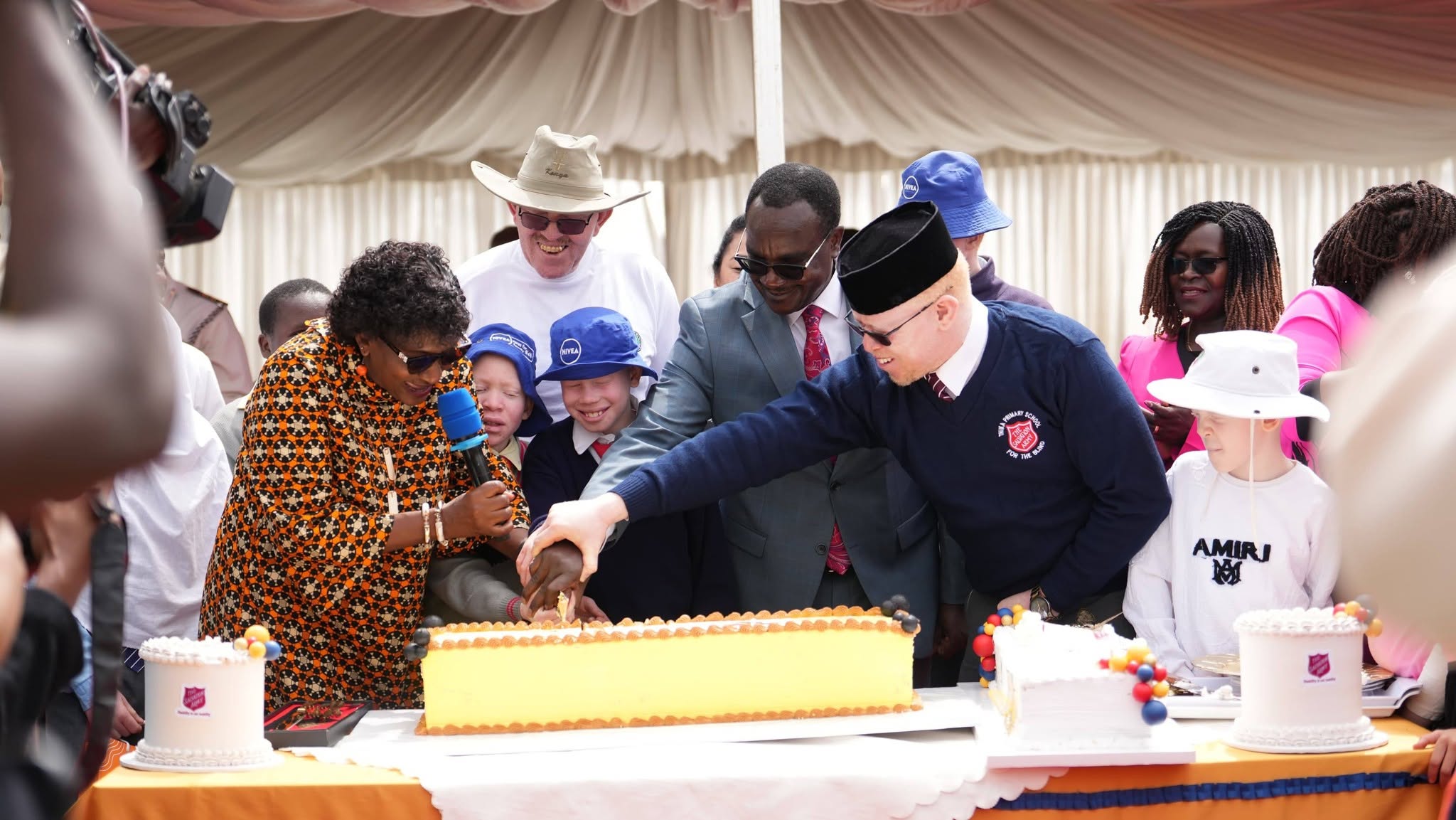
A major milestone was marked at the Thika School for the Visually Impaired as President William Ruto officially declared the institution a Centre of Excellence for Special Needs Education during celebrations marking International Albinism Awareness Day and the school’s 80th anniversary.
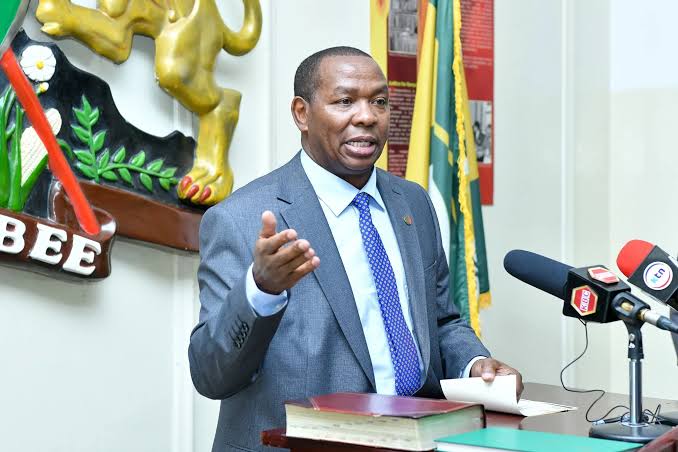
In a speech delivered by Education Cabinet Secretary Julius Ogamba, the President hailed the institution’s eight decades of service in transforming the lives of learners with visual impairments and advancing inclusive education in Kenya.
The Head of State said the designation recognizes the school’s rich history, outstanding achievements and enduring legacy, noting that generations of learners who passed through the institution have gone on to make meaningful contributions in society.
He added that the recognition affirms the school’s future role as a leading institution in promoting innovation, inclusion and excellence in special needs education.
President Ruto further pledged continued government investment in infrastructure, assistive technologies and teacher training to support learners with disabilities and enhance opportunities for research, innovation and partnerships in the sector.
PRESIDENT RUTO CHAMPIONS INCLUSION OF PERSONS WITH DISABILITIES
The President reaffirmed the Government’s commitment to equality and inclusion, calling on Kenyans to embrace diversity and reject all forms of discrimination.
Referring to this year’s International Albinism Awareness Day theme, “Proudly in My Skin: Celebrating All Skin Tones,” President Ruto said the message challenges society to move beyond stereotypes and prejudices and instead celebrate the unique qualities that make every individual valuable.
He emphasized that human dignity is neither determined by appearance nor defined by disability, while reiterating the Government’s commitment to removing barriers that limit participation in education, employment and leadership.
GOVERNMENT WARNS AGAINST SCHOOL VIOLENCE AND INDISCIPLINE
Education Cabinet Secretary Julius Ogamba used the occasion to issue a stern warning against rising cases of unrest and indiscipline in learning institutions.
Ogamba said schools must remain safe spaces for learning and character development, stressing that violence, destruction and unrest have no place in institutions established to nurture the nation’s future leaders.
The CS also urged parents and guardians to play a greater role in instilling discipline, noting that negative behaviour in adulthood often stems from years of unchecked disrespect, entitlement and lack of accountability during childhood.
ISAAC MWAURA HAILS THIKA SCHOOL’S 80-YEAR LEGACY
Government Spokesperson Isaac Mwaura praised the Thika School for the Visually Impaired for its remarkable contribution to education and empowerment over the last eight decades.
Mwaura described the institution as a beacon of hope that has transformed countless lives since its establishment in 1946, noting that it was the first school of its kind in East and Central Africa.
He said the school’s legacy is reflected not only in its longevity but also in the thousands of learners who have gone on to become professionals, leaders, entrepreneurs and productive citizens.
ALBINISM SOCIETY OF KENYA CELEBRATES 20 YEARS OF ADVOCACY
The Albinism Society of Kenya also marked two decades of advocacy and service, celebrating significant milestones achieved in the fight for the rights and inclusion of persons with albinism.
Mwaura noted that the organization was founded in 2006 to address widespread discrimination, myths and exclusion affecting persons with albinism and has since grown into one of Africa’s leading disability rights organizations.
He credited the society with helping secure legal recognition, parliamentary representation, affordable sunscreen and greater public awareness on albinism across the country.
KENYA’S ALBINISM PROGRAMME HAILED AS GLOBAL MODEL
Kenya’s commitment to supporting persons with albinism was highlighted as one of the country’s most successful disability inclusion initiatives.
Mwaura said the National Albinism Sunscreen and Support Programme, established in 2013 under the National Council for Persons with Disabilities, remains the first initiative of its kind globally.
According to him, the programme has received approximately Sh100 million annually for thirteen consecutive years, improving access to sunscreen, healthcare and protective interventions for thousands of persons with albinism.
ALBINISM SOCIETY TRANSFORMS LIVES THROUGH EDUCATION AND EMPLOYMENT
The Albinism Society of Kenya was also commended for implementing programmes that have significantly improved the lives of persons with albinism.
Mwaura said initiatives such as Imarisha Masomo, Ajira and Linda Afya have enabled beneficiaries to access education, healthcare services, scholarships and employment opportunities.
He noted that beneficiaries have secured jobs in major organizations including Safaricom, Kenya Airways, ABSA Bank, NCBA Bank, Carrefour and various government institutions.
NCPWD COMMENDS GOVERNMENT FOR SUPPORTING PERSONS WITH ALBINISM
The National Council for Persons with Disabilities (NCPWD) applauded the Government for increasing support towards persons with albinism.
Assistant Director in charge of the Albinism Programme, Alex Munyere, revealed that Sh10 million was reinstated last year to strengthen interventions targeting persons with albinism.
He welcomed the growing employment opportunities available to members of the community and credited Government Spokesperson Isaac Mwaura for championing disability rights and inspiring young people living with disabilities.
ALBINISM SOCIETY CALLS FOR A MORE INCLUSIVE SOCIETY
Meanwhile, the Albinism Society of Kenya called on Kenyans to actively promote inclusion, equality and respect for persons with albinism.
Programmes Officer Daniel Omeno urged stakeholders to strengthen access to education, healthcare, sun protection, employment opportunities and equal participation in all aspects of life.
Omeno challenged society to confront harmful stereotypes and replace them with understanding, acceptance and respect, emphasizing that meaningful inclusion requires action from government, private institutions, communities and families alike.