
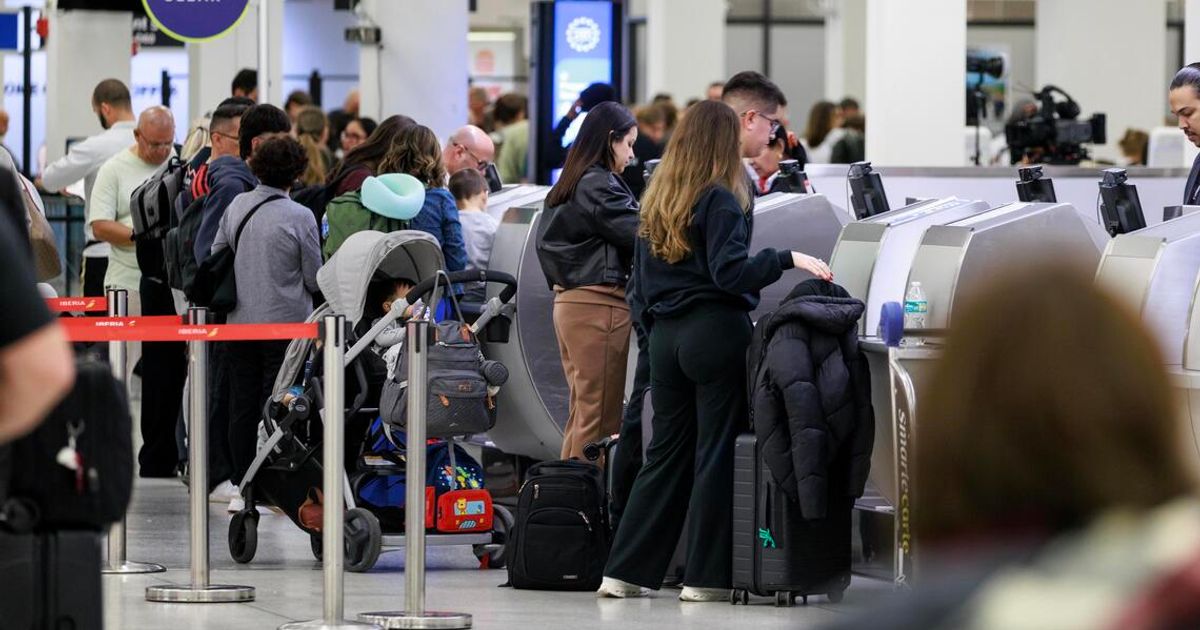
Thousands of flights across the United States have been cancelled or delayed following a nationwide air traffic control disruption that forced aviation authorities to temporarily ground departing aircraft.
The disruption, which occurred on Friday, November 13, 2026, affected airports across the country after technical problems disrupted telecommunications systems used by the Federal Aviation Administration (FAA) to manage air traffic.
The nationwide ground stop lasted approximately five hours before authorities allowed flights to resume.
However, the impact continued into Saturday, with airlines struggling to reposition aircraft, reorganise flight crews and clear passenger backlogs.
According to the Associated Press, more than 6,400 flights had been cancelled by Saturday night, while more than 800 additional cancellations had been recorded for Sunday.
The disruption affected thousands of passengers travelling domestically and internationally.
What caused the US aviation disruption?
US Transportation Secretary Sean Duffy said telecommunications problems affecting the FAA’s air traffic control infrastructure forced authorities to suspend departing flights as a safety precaution.
During a briefing, Duffy explained that the system experienced instability after routers became overloaded with data, resulting in inconsistencies in information transmitted through the network.
The FAA’s telecommunications infrastructure supports communication between air traffic control facilities and other aviation installations, including the transmission of operational data and information required to manage aircraft movements.
The disruption meant aviation authorities could not guarantee the required reliability of the affected systems, prompting the nationwide ground stop.
Officials said approximately 3,500 aircraft were in the air when the shutdown was initiated, and air traffic controllers and pilots worked to bring them safely to the ground.
The FAA subsequently tested its systems before allowing departing flights to resume.
Authorities rule out immediate evidence of cyberattack
The incident initially raised concerns about whether the disruption could have resulted from a cyberattack or interference with critical American infrastructure.
However, Homeland Security Secretary Markwayne Mullin said there was no indication that the incident was a deliberate attack against the United States.
Officials attributed the disruption to telecommunications problems rather than a confirmed cyberattack.
The incident was also reported to be unrelated to the separate Microsoft outage that had prompted speculation on social media.
Investigations into the technical failure and the circumstances surrounding the communications disruption continued as authorities worked to restore normal operations.
Ageing aviation technology raises fresh concerns
The disruption has renewed scrutiny of the technology supporting America’s air traffic control system.
Duffy acknowledged that the United States was operating with ageing aviation infrastructure and argued that significant investment was necessary to modernise the system.
The administration has been seeking additional funding to replace outdated equipment and improve the reliability of air traffic management infrastructure.
The FAA’s telecommunications network is particularly important because it connects different air traffic control facilities and supports the communication systems required for safe aircraft operations.
The latest incident has therefore raised questions about the consequences of relying on ageing technology in an aviation industry that handles tens of thousands of flights every day.
What the disruption means for international travellers
The United States is one of the world’s largest aviation markets, making disruptions to its air traffic management system significant beyond its borders.
International airlines operating routes to and from American airports can experience delays when aircraft, crews and airport facilities are affected by nationwide operational problems.
Passengers travelling from Africa to the United States, particularly those connecting through major international aviation hubs, could also face missed connections, additional accommodation expenses and changes to their travel arrangements.
The incident highlights the importance of reliable aviation infrastructure and contingency arrangements that allow airports and airlines to respond to unexpected technical failures.
ALSO READ: Trump, Putin and Xi to Hold Historic Three-Way Summit in China: What It Means for Global Politics
Lessons for African aviation authorities
The disruption also offers lessons for African countries investing in aviation infrastructure and expanding international air connectivity.
As passenger numbers increase and airports modernise their operations, the reliability of communication networks, navigation systems and air traffic control technology becomes increasingly important.
African aviation authorities must ensure that critical systems have adequate backup arrangements and that technical failures can be managed without compromising passenger safety.
The incident demonstrates that even highly developed aviation systems are vulnerable to infrastructure failures.
For African countries seeking to strengthen their aviation sectors, investment in modern technology, cybersecurity, maintenance and technical expertise remains essential.
Although US aviation authorities restored operations after the shutdown, the disruption has exposed the economic and operational consequences that can follow when critical air traffic control infrastructure fails.