The United States has reportedly lost its measles-elimination status after the highly contagious disease continued spreading locally for more than 12 consecutive months, ending a 26-year period in which the country had maintained the designation.
The Pan American Health Organization (PAHO), the regional office of the World Health Organization (WHO) for the Americas, made the reported decision after reviewing evidence of sustained measles transmission.
According to Reuters, the decision was reported on November 13, 2026, by the Wall Street Journal, which cited people familiar with the matter. PAHO had not immediately responded to Reuters’ request for comment.
The development comes amid a significant resurgence of measles infections in the United States, with the country recording thousands of confirmed cases in 2026.
Measles infections reach their highest levels in decades
Figures published by the US Centers for Disease Control and Prevention (CDC) show that 5,182 confirmed measles cases had been reported by November 5, 2026.
The figure is significantly higher than the 2,289 cases recorded throughout 2025.
The CDC’s subsequent reporting dashboard also showed the 2026 total continuing to rise, with 5,412 cases listed in its November 12 update. These figures are preliminary and subject to revision.
The resurgence has been associated with declining vaccination coverage and outbreaks in communities where immunisation rates are below the levels needed to prevent sustained transmission.
Measles is an extremely contagious viral disease that can cause serious complications, including pneumonia, brain inflammation and death, particularly among young children.
The United States first achieved measles-elimination status in 2000 following extensive vaccination efforts.
Losing the designation does not mean the disease had completely disappeared and suddenly returned. Rather, it means that sustained local transmission has been re-established, according to the international elimination criteria.
Why vaccination remains important
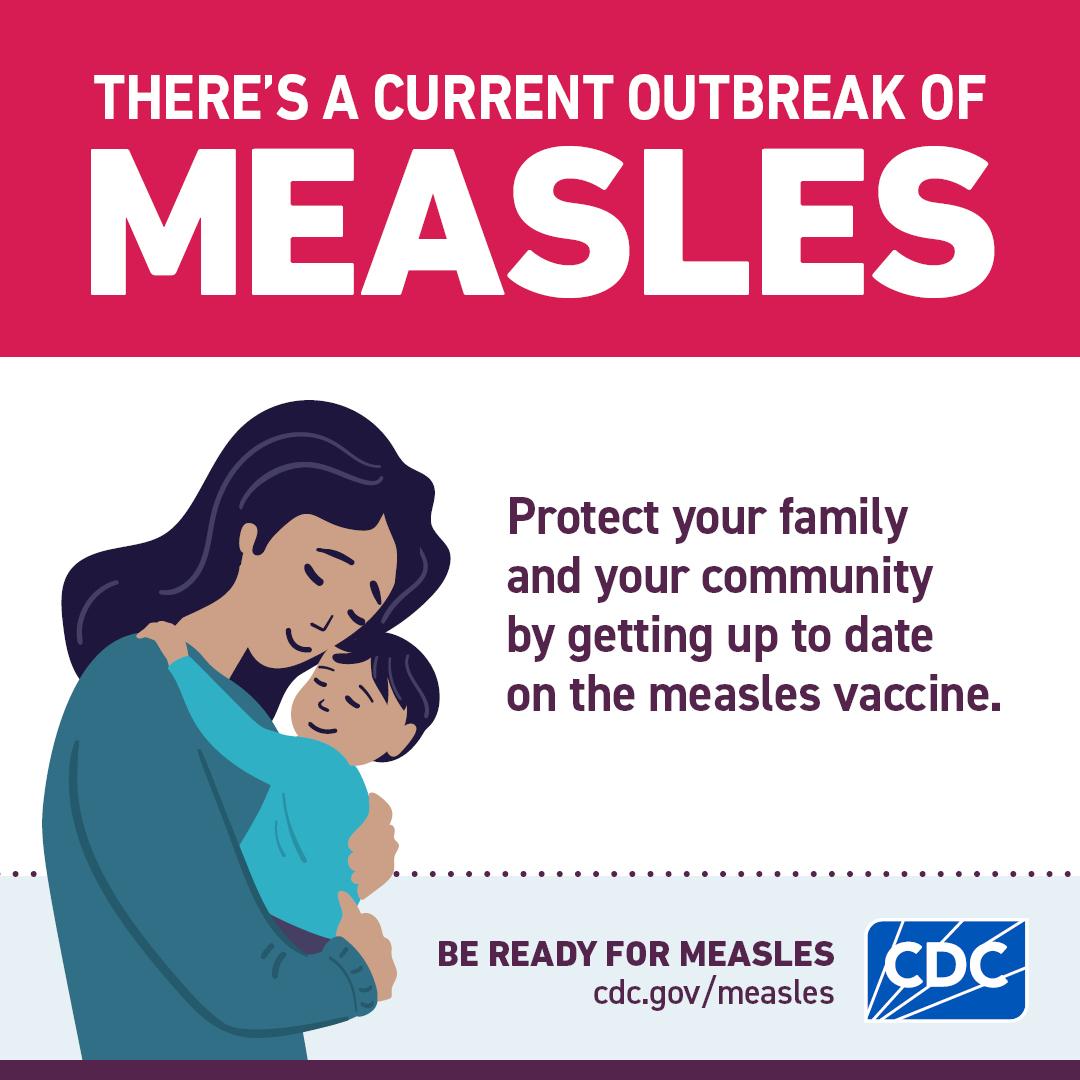
Health authorities have consistently emphasised that vaccination remains the most effective way of preventing measles outbreaks.
According to the CDC, two doses of the measles, mumps and rubella (MMR) vaccine provide approximately 97 per cent protection against measles.
Public health experts recommend vaccination coverage of at least 95 per cent to prevent sustained transmission and protect people who cannot receive vaccines for medical reasons.
When immunisation coverage declines, the risk of outbreaks increases, particularly in communities with large numbers of unvaccinated people.
The US experience highlights how even countries with advanced healthcare systems can experience a resurgence of preventable diseases when vaccination gaps emerge.
What Africa can learn from the US measles outbreak
The development carries important lessons for African countries, where childhood immunisation programmes remain central to preventing infectious diseases.
Although vaccination access has improved in many parts of the continent, some communities continue to experience challenges involving healthcare infrastructure, vaccine availability, misinformation and geographical access to medical facilities.
The American experience demonstrates that maintaining elimination status requires more than achieving high vaccination coverage at one point in time.
It requires consistent investment in routine immunisation, disease surveillance, public education and rapid responses to outbreaks.