

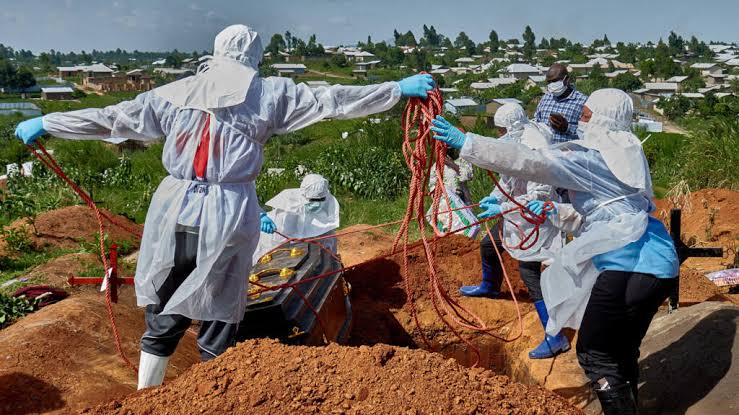
The Ebola outbreak caused by the Bundibugyo virus in the Democratic Republic of Congo (DRC) has surpassed 11,000 confirmed cases, with more than 5,400 deaths recorded, according to the latest figures from the European Centre for Disease Prevention and Control (ECDC).
As of November 11, 2026, the DRC had reported 11,114 confirmed cases and 5,433 related deaths, with transmission continuing across eight provinces.
The latest figures represent an additional 72 confirmed cases and 46 deaths compared with the previous reporting period.
Ituri Province remains the worst-affected area, accounting for 7,728 confirmed cases and 3,655 deaths. North Kivu has also recorded a significant number of infections, with 2,761 cases and 1,523 deaths.
The outbreak has affected 67 of the country’s 178 health zones, highlighting the scale of the public health challenge facing the country.
The outbreak has also attracted international concern because of insecurity, difficulties accessing affected communities and weaknesses in healthcare services, which have complicated disease surveillance and response efforts.
Ebola Situation in Kenya
Kenya has also reported cases linked to the regional outbreak, although the situation has shown signs of containment.
According to the ECDC, Kenya had recorded nine confirmed cases, including two deaths, as of November 11.
The last confirmed case was reported on October 20. The remaining patient under treatment was discharged on November 11, while all identified contacts completed the required 21-day monitoring period.
The World Health Organization has described the outbreak as the largest Ebola outbreak ever recorded in the Democratic Republic of Congo.
The outbreak is caused by the Bundibugyo virus, a strain for which there is currently no approved vaccine or specific treatment.
Health authorities continue to emphasise early detection, infection prevention and control, effective surveillance and community engagement as essential measures in containing the disease.
The developments underscore the importance of regional preparedness, particularly as countries strengthen cross-border disease surveillance and emergency response systems.
READ MORE: Ebola Outbreak: Kenya Discharges Five Patients as More Than 5,000 Die Across Africa


