
The government has launched a major market intervention to clear over 60,000 bags of Mwea rice, with the Kenya National Trading Corporation (KNTC) committing to purchase locally produced rice in a move aimed at easing storage constraints, improving farmer’s cash flow and strengthening Kenya’s domestic rice value chain.
The exercise, being undertaken jointly by KNTC, the Agriculture and Food Authority (AFA) and farmers cooperatives led by Mwea Rice Growers Multipurpose Cooperative Society, comes as farmers prepare for another harvest while thousands of bags from the previous season remain in storage awaiting buyers.
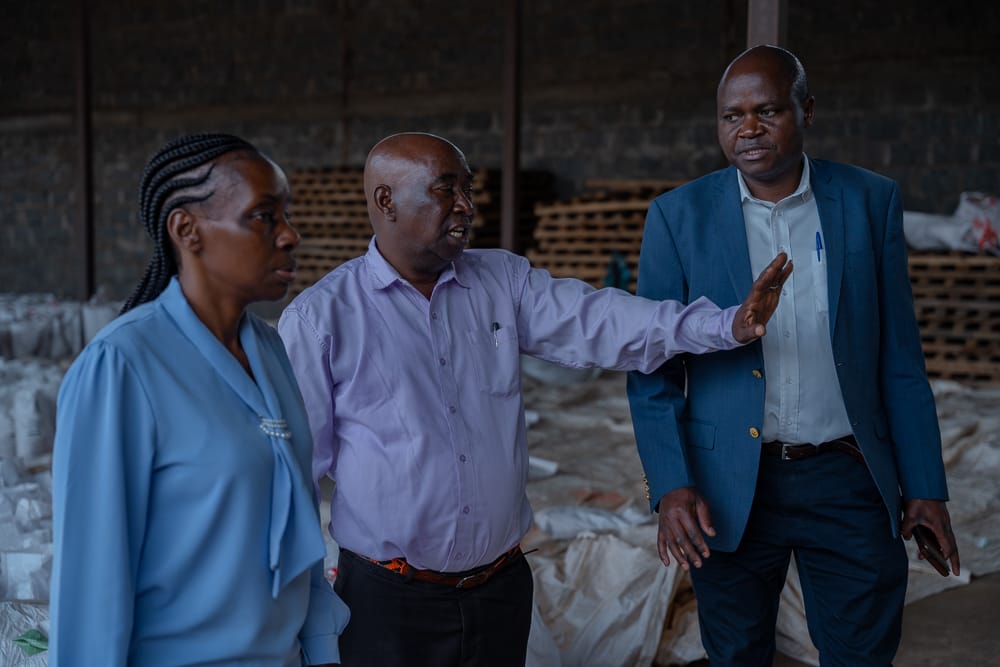
Speaking during an inspection tour in Mwea, Agriculture and Food Authority Acting Director General Calistus Kundu said the Government remains committed to ensuring Kenyan farmers have a dependable market for their produce, noting that supporting local production is critical as the country works to gradually increase domestic rice output.
Leading the exercise, Kenya National Trading Corporation Managing Director Lucy Anangwe said KNTC has committed to purchasing all local rice currently held by the cooperatives, with deliveries expected to continue through mid-August before the rice is distributed to public institutions across the country.
“We are here to assess the situation on the ground and reassure farmers that the Government remains committed to supporting the marketing of locally produced rice. KNTC is fully committed to mopping up the rice produced by farmers,” Anangwe said.
The MRGM Cooperative Society, which represents more than 80 per cent of rice farmers in the region currently holds over 30,000 bags in storage and expects another 25,000 bags during this third crop season while self help groups are holding over 15,000 bags bringing the total volume targeted under the programme to over 70,000 bags.
To accelerate deliveries, KNTC and MRGM cooperative have agreed on a schedule of at least two truckloads per day, while the milling plant will introduce a third processing shift, increasing daily output to 56 tonnes of milled rice and creating additional employment opportunities.
The cooperative’s Chief Executive Officer Anthony Waweru said delayed marketing had affected farmer payments but expressed confidence that the new arrangement would restore normal operations.
“We had expected to pay farmers earlier, but marketing challenges delayed the process. With KNTC now taking up the rice, we expect to clear the current stock within a month and begin paying farmers by July 20,” Waweru said.
Officials said the intervention is designed to strengthen Kenya’s domestic rice value chain and improve returns to farmers, while complementing the country’s broader efforts to meet national rice demand through both increased local production and strategic imports.