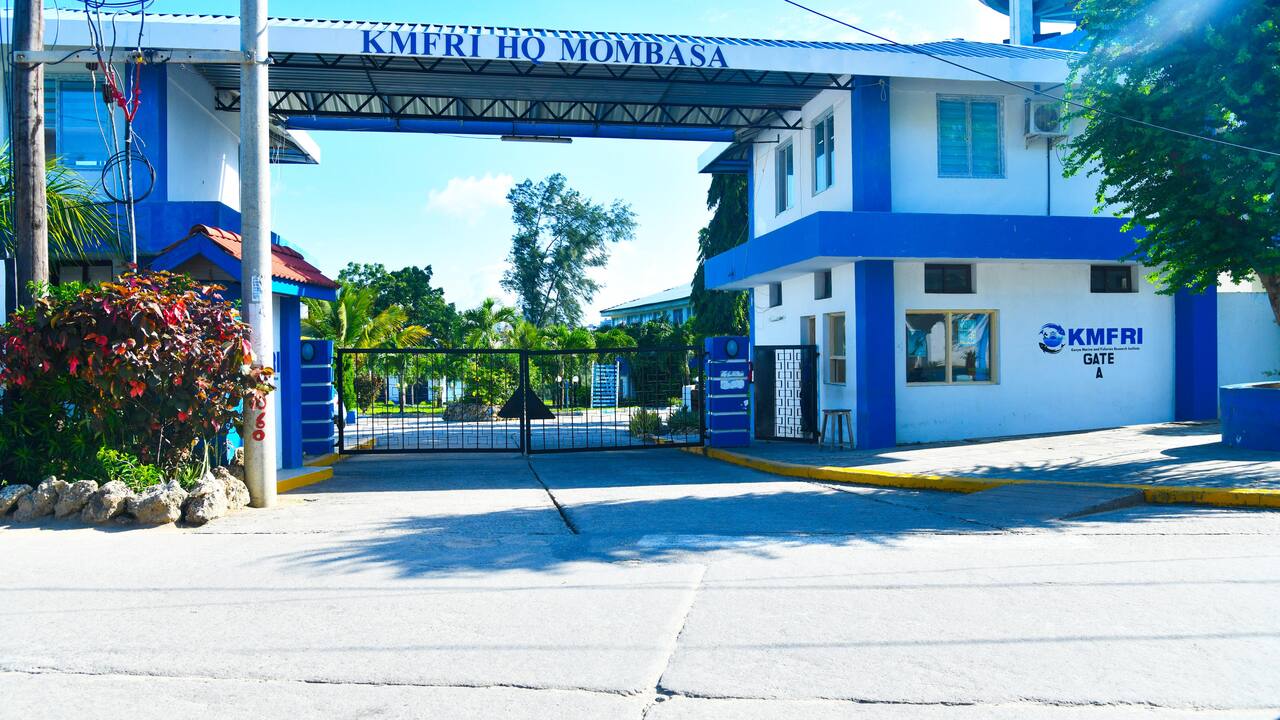
The Employment and Labour Relations Court in Mombasa has quashed Kenya Marine and Fisheries Research Institute’s (KMFRI) second-phase recruitment process, ruling that it violated constitutional principles of fairness, transparency, equal opportunity and accountability in public service.
In a judgment delivered on November 10, 2026, Justice Ocharo Kebira declared the decision to conduct a second round of interviews, the interviews themselves and appointments made pursuant to the exercise unconstitutional.
The case was filed by John Father Small and Oliver Oyengo Masawa, who challenged what they described as an irregular recruitment exercise that allegedly favoured a closed group of individuals at the expense of other qualified Kenyans.
The dispute arose from a recruitment advertisement published by KMFRI on November 13, 2025, inviting applications for 71 temporary positions across 25 job categories, with successful candidates expected to serve on 12-month contracts.
Following the advertisement, the institute conducted interviews between January 26 and 28, 2026.
However, the petitioners raised concerns after KMFRI conducted another round of interviews on February 10, 2026, without publicly advertising the positions or notifying other applicants who had participated in the initial recruitment process.
According to KMFRI, the second exercise was intended to consider former casual employees who had not been invited to the first interviews, those who had performed commendably but missed out because of limited vacancies, and staffing requests from departments experiencing shortages, subject to budget availability.
The institute maintained that the process had been authorised by its Board of Management during its 130th session.
However, the court found that the second phase effectively created a closed recruitment process that denied other qualified Kenyans an equal opportunity to compete for public positions.
Court questions fairness of second recruitment phase
In its determination, the court found that KMFRI had initially invited members of the public to compete for the advertised positions but subsequently opened a separate process for a selected group without giving the wider public an opportunity to participate.
Justice Kebira observed that the institute could not change the conditions of an advertised recruitment exercise midway and restrict access to a particular category of applicants without notifying the public.
The judge highlighted the case of the second petitioner, Oliver Oyengo Masawa, who scored 77.60 per cent during the first-phase interview for the position of Assistant Research Scientist.
In the second round, another candidate interviewed for the same position scored 67.20 per cent. The court observed that had the two candidates competed under the same conditions, Masawa would have ranked above the other candidate.
The judgment also questioned why Eugene Praise Kasuku, who had served as an intern alongside the first petitioner, was invited to the second round and recommended for the Corporate Communication Officer position, while the first petitioner was not invited.
The court further noted that KMFRI had failed to produce the minutes of the Board of Management’s 130th session, which it said had authorised the second recruitment exercise.
Justice Kebira also questioned the institute’s explanation regarding the number of vacancies available.
Although KMFRI indicated that four candidates appointed during the first phase had declined their offers, the second interview panel recommended 18 candidates for appointment.
The court noted that no budgetary approvals, establishment details or final list of appointees had been presented to explain the recruitment.
However, the judge clarified that the petitioners had not proved their claim that more than 120 people were ultimately recruited, and made no finding that the allegation was true.
The court also expressly stated that it had not established nepotism or personal corruption against any individual KMFRI officer, noting that the constitutional violations arose from the design and conduct of the recruitment process itself.
Petitioners call for accountability after ruling
Reacting to the judgment, the petitioners said they moved to court to defend the constitutional right of qualified Kenyans to compete fairly for opportunities in public institutions.
Speaking to this reporter the first petitioner, John Father Small argued that the second recruitment exercise undermined the principles of fairness, transparency, accountability and equal opportunity in public service.
“As a young Kenyan, I felt that the process undermined the constitutional principles of fairness, transparency, accountability, and equal opportunity in public service when a group of individuals was fixed behind closed doors in predetermined interviews,” the petitioner said.
“We therefore moved to court to challenge the process and defend the right of every qualified Kenyan to compete fairly for public opportunities.” He added.
Following the ruling, the petitioners said they expected KMFRI to comply fully with the judgment and ensure that any future recruitment is conducted through an open, transparent and competitive process.
They also called for greater scrutiny of the institution’s leadership, arguing that the judgment raises serious questions about the oversight and accountability of the Chief Executive Officer and the Board of Management.
“I also believe the ruling raises serious questions about the leadership, oversight and accountability of the CEO and Board of Management. Their decisions and their ability to uphold constitutional values in managing a public institution must now come under public scrutiny,” John Small emphasized.
The petitioners described the judgment as an opportunity to strengthen accountability in public institutions, insisting that those entrusted with public office must demonstrate integrity, accountability and respect for the Constitution.
“This should be a turning point in how public institutions approach recruitment and public accountability,” they added.
What the court ordered
In its final orders, the court quashed the decision to conduct the second recruitment phase, communicated through an internal memorandum dated February 2, 2026.
It also nullified the interviews conducted on February 10, 2026, the recommendations arising from the second interview panel and appointments made pursuant to that process.
The ruling, however, did not affect the 71 appointments made following the initial recruitment exercise. Justice Kebira declined to invalidate the first-phase recruitment, finding that the petitioners had not demonstrated that it violated the Constitution or the law.
The judge further ruled that KMFRI remains at liberty to fill genuine vacancies within its approved establishment and budget, provided it conducts an open, transparent and competitive recruitment process in compliance with the Constitution.
Those whose appointments are affected by the judgment will be free to compete alongside other qualified Kenyans in any fresh recruitment exercise. The court also declined to award the petitioners compensation, finding that they had not demonstrated that either would have secured an appointment had the second recruitment phase not taken place.
Their separate claim concerning access to information was also dismissed because they had not exhausted the procedure provided under the Access to Information Act through the Commission on Administrative Justice. Each party was ordered to bear its own costs.
The judgment reinforces constitutional requirements that public appointments must be based on fair competition, merit, transparency and equal opportunity, rather than closed processes that exclude other qualified applicants.
READ MORE: Cartel Smashed as Court Demands Over KSh 210M in Fines for Kilifi Ghost Contract Theft